Author: Maria Martin

  • How to approach Pricing Strategy for Marketplace as a Product Manager

    How to approach Pricing Strategy for Marketplace as a Product Manager

    “Why should I worry about the pricing strategy?” I asked my manager during a conversation.

    A bit of a story.

    I had taken up the ownership of a newly launched product. While we had basic pricing model in place, we had to re-evaluate our pricing strategy for new market launches. My manager asked me to come up with a proposal. At first, I resisted because I always assumed it was someone else’s job. After a long conversation with my manager, in which he explained why should a Product Manager think about the pricing strategy. You are the best person to understand core offerings of the product and the customer problems it solves. Therefore, devising a pricing strategy or ability to propose a pricing strategy is very much part of the job.

    That was my cue to start learning all about the pricing strategies and monetisation models. I bought the book Monetising Innovation by Madhavan Ramanujam and Georg Tacke. I watched countless videos on this topic from Y Combinator and other channels. I scouted the internet for any blog from startup founders and CPOs who had done this before. I was curious about both failure and success stories. I particularly remember an excerpt from Rahul Vohra’s interview. Link

    While I could not contribute to the pricing strategy at my previous company, I got a chance to work on a case study during my interview with one startup in Amsterdam.

    How to approach Pricing Strategy for Marketplace

    In this blog, I am laying out my framework and the approach I took. I am not aiming to provide exact answers because the assumptions and hypotheses may be different depending upon the context.

    Disclaimer: I cannot disclose the name of the company, so let’s call it Narnia.

    Here is the case:

    Narnia is a marketplace for buyers and sellers of agricultural goods. It is a new platform and has commitment from few customers to use it in the beta mode. Narnia wants to start with one or 2 products initially and then expand in different categories. Devise a monetisation model with hypotheses and validations. Monetisation model should include 1) Who to charge and 2) How to charge (pricing model).

    Here is what I would do:

    → Understand the market and the players

    Understand the core value proposition of the platform

    → Describe the pricing strategy and the model

    State the hypotheses and validation methods

    Understand the market and the players

    Since we know this is a marketplace for sellers and buyers of the agricultural goods, let’s start with them. Find out more about them.
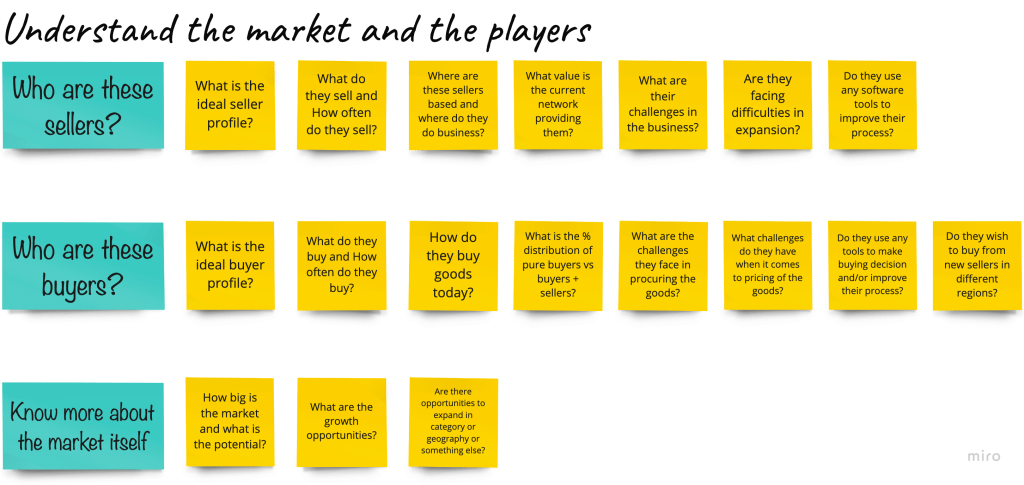
    1. Who are these sellers?
      1. What is the ideal seller profile?
      2. What do they sell and how often do they sell?
      3. Where are these sellers based and where do they do business?
      4. What value is their current network providing them?
      5. What are their challenges in the business?
      6. Are they facing difficulties in expansion?
      7. Do they use any software tools to improve their process?
    2. Who are these buyers?
      1. What is the ideal buyer profile?
      2. What do they buy and how often do they buy?
      3. How do they buy goods today?
      4. What is the % distribution of pure buyers vs buyers + sellers?
      5. What are the challenges they face in procuring the goods?
      6. What challenges do they have when it comes to pricing of the goods?
      7. Do they use any tools to make buying decision and/or improve their process?
      8. Do they wish to buy from new sellers in different regions?
    3. Know more about the market itself
      1. How big is the market and what is the potential?
      2. What are the growth opportunities?
      3. Are there opportunities to expand in category or geography or something else?

    During this initial discovery phase, you may need data from both primary and secondary sources. This means if you have access to the sellers and buyers, talk to them! Else you can rely on readily available data from companies who may have done this research before.

    Understand the core value proposition of the platform

    1. Ask this “What core need of these sellers and buyers is the platform satisfying?”
    2. Identify the journey of the seller and the buyer. Put a pin on a potential opportunity as you do this.
    3. Does the platform have competitors? (If yes, just note them as threats. This is not an issue but it is good to be aware of).
      1. Are there other platforms with exact same solution?
        1. If yes, what do they offers?
        2. If no, why has anyone not done this before? Is that a risk to be aware of?
    4. If the product is already built, then how does the flow look like? If it is not built then draw out the ideal journey of the customer on the platform on a whiteboard.
    5. What part of the product the customer cannot live without? Knowing this will help the team focus on the right things.
    6. If this platform did not exist, what were their current alternatives? Do they use only their existing network and nothing else?

    Describe the pricing strategy and the model

    This is where you will put your knowledge from the product discovery phase to use. By now, you would have identified the customer’s problems, platform’s value proposition and the growth opportunities.

    It is time to propose!

    Option 1: You could say, we should “Charge the Seller” {Who to charge?} a “% commission on each transaction.” {How to charge}

    OR

    Option 2: You could also say, we should “Charge the Seller and the Buyer” a “% commission on each transaction.” {How to charge}

    This is not the only way to do pricing but whatever you choose to propose should be backed up with hypotheses. This brings me to the next section.

    State the hypotheses and validation methods

    Let’s take Option 1 → Seller is charged % commission per completed transaction.

    Following are my hypotheses:

    Why charge the Sellers?

    • Sellers find value in the marketplace and are able to sell goods at a better price because of data-driven insights and recommendations of Narnia.
    • Sellers are able to discover new demand and have the potential to expand their business to new regions.

    Why not charge Buyers?

    • Driving demand on the marketplace is crucial for initial phase to get the wheel running, and charging buyer would create an entry barrier.
    • Buyer’s core need is to look for the cheapest and most valuable product versus seller’s core need is to get rid of the supply; unsold supply is often costly to maintain.
    • Charging buyers will be difficult to scale because it needs huge volume of buyers to make money.

    Why this pricing model?

    • Narnia can scale their profits with Seller’s transactions growth.
    • Sellers will have a lower barrier to entry because of no prior commitment to pay.
    • Sellers are incentivised to engage with the platform before committing to pay; e.g. listing supply.

    Other model:

    • We could explore Subscription or fixed cost based model. However, I feel it will limit the potential of Narnia in earning more despite the Seller’s transaction growth.

    If you think about it, successful marketplaces like Amazon often charge the Seller on the platform and not the buyer. However, there are marketplaces that charge both seller and the buyer.

    Now for each of these hypotheses, I added validations. Validations had quantitative and qualitative methods.

    Think about it. You suggested that we should charge the seller and not the buyer. Which performance indicators can be monitored to determine whether the pricing strategy works or not.

    Here is an example:

    Hypothesis: Sellers find value in the marketplace and are able to sell goods at a better price.

    Indicators: Increase in new and repeat transactions, Able to sell at better price.

    Validation

    Quantitative data:

    a) Analyse the transactions and find the delta between the listed price, bidding price, Narnia recommended price and actual selling price of the goods. The % difference should indicate if sellers got more or less price for goods than expected.

    b) Track growth in new and repeat transactions for each seller. Ideally, there should be upward trend.

    Qualitative data:

    Gather subjective inputs as much as possible by interviewing every customer and ask if they find valuable to be on the marketplace and what more do they expect.

    I had more hypotheses and validations which I have not purposely listed in this blog else it will be too big. You get the picture.

    Document the threats and risks to your model

    1. In which scenario is the pricing model likely to fail?
    2. What can cause the drop in transactions?
    3. Will customers prefer another pricing model? Do we have feedback from the customers to make us think in entirely different direction?
    4. Is the pricing strategy not aligned with the business strategy?

    An example of one such risk: Commission model will make money only when there are substantial number of transactions, Narnia may make money only in the long run, not immediately.

    It is hard to say if this strategy will work or not. Much of Product Manager’s work is dependent on the company and its context. I am currently researching on ways to test my pricing strategy framework and do it myself. Your ideas are welcome.
  • Choosing the right payment gateway for Indian businesses

    Choosing the right payment gateway for Indian businesses

    I worked in Fintech companies for more than 4 years and selling payment gateways was my job. There is a lot to be said about the benefits of having a payment gateway but since you have landed on this article, let’s assume you already need a payment gateway. You may have even created an excel sheet to track various products, its features and pricing.

    Let’s help you out further.

    First things first, when I say Payment Gateway, think of Razorpay, Payu, Cashfree, Paytm etc. These companies typically work for small and medium sized businesses.

    Here is a million dollar question then: Out of all the payment gateways, which is the right one for you?

    An Indian mind might think, “cheaper is better.” That is not necessarily true. Of course, you want to keep your costs low but you don’t want to compromise on the quality and experience either. No matter which payment gateway you use, your customer will be directly impacted. The last thing you want is to deliver a poor payment experience to a customer who has chosen your product over millions of others.

    I have laid out factors for your consideration during the evaluation phase.

    My best tip is not to rush for the cheapest available option.

    Payment methods – Domestic and International:

    This is the first thing to check. Usually, all the payment methods are listed on the company’s website. You will notice Domestic and International methods of payment are listed separately.

    My tip: Not all businesses automatically qualify for international payments. Verify ahead of time with the payment gateway’s team.

    In most Payment Gateways, you will see standard payment methods – Debit card, Credit card, Net Banking, UPI, Buy Now Pay Later (EMI-based), Digital wallets like Paytm, Mobikwik etc.

    International payment methods are usually limited to credit cards. If you have customers in other countries and they need payment via specific method, get it confirmed.

    Suppose you are looking for a fairly new payment method, you can check with the team directly. Sometimes, they launch features in beta mode; meaning they make these features available only for select group of customers.

    How to use the payment gateway

    This factor is very important to understand because there are multiple ways to use the payment gateway. Typically you will see: Pre-built Checkout flow, Payment Link, API integration.

    Here is a framework for you:

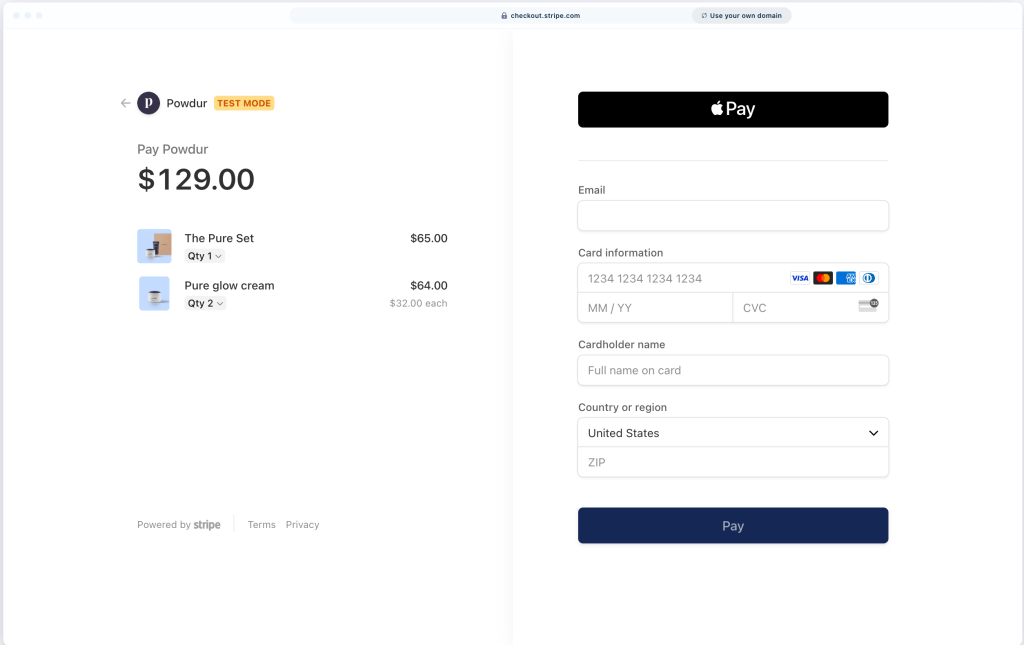
    Small Business, No in-house technical (software engineers) team, few daily transactions (between 0-50) → Go for ready-to-use solution such as Payment Link or Checkout built by the payment gateway. For example, here is how Stripe’s pre-built checkout looks like.

    stripe checkout flow

    Medium & Large sized business, has in-house technical team, substantial daily transactions (more than 50-100) → In this case, if you are simply testing the waters, you can use the ready-to-use Checkout flow at first, else go for the API integration. The advantage of a pre-built solution is that it allows you to validate your hypotheses and understand the customer needs. You can invest time in analysing whether customers are satisfied with the provided choices. Once you have enough validation for your usecase, you can go ahead with the API integration.

    Time for account approval

    Or as we call it “client onboarding time.” Every company is fighting for this metric – ‘how fast can I onboard the client’. Onboarding flow can be as easy as signing up on their website with basic company details or it can get as difficult as you having to submit tons of documents before you can even see the dashboard. Although, I will argue that most payment gateways have a very fast onboarding these days. Just ensure you have clarified this before selecting one.

    Compliance requirements for your business type

    Business registration is must. Even if you are an Individual selling products you could be asked for Sole Proprietorship registration document. There are some exceptions for personal use but as far as I know, it is either limited by access to features or the amount you can collect.

    Have a bank account that matches the business registration document. This is where you will receive the money you collected from the customers.

    Some businesses are not allowed to use the payment gateways or they have limited access to the features. For example, gambling business is not compliant with most payment gateways. This is ideally mentioned in the Terms and Conditions document. Alternatively, you can talk to their Sales Executive and find out if your business will be allowed or not.

    I must admit one thing here, most Sales teams are incentivised to onboard as many new clients as possible so they may let this slide and not inform you properly but you should ask tough questions.

    But why is this important? → Ongoing Due Diligence.

    This is a kind of industry secret; perhaps not much of a secret to the people working in Fintech. Every payment gateway has a process of re-verifying businesses and their transactions on a regular basis. There is a chance your prior business approval may be rejected if some suspicious activity is detected. Hence, regardless of the initial decision, you can still face rejection.

    When I worked in the Onboarding Team in Instamojo, I had daily requests from clients who wanted to get approvals for their businesses. If I noticed a risky type of business, I would explain the situation and politely decline.

    My tip → just make sure you have stated the Purpose of Business as truthfully as possible and avoid deceiving the team.

    Expected Transactions and its Volume

    You should evaluate your own current or projected transaction data. In the Payment Gateway industry, we use 3 terms: Number of Transactions, Ticket Size (average amount per transaction), Transaction Volume. For example, you can have 10 transactions a day with an average amount of INR 1000 then your volume is INR 10,000. A distinction should be made between your Total Transaction volume and Transaction volume through payment gateways.

    The only reason to consider this factor is for Pricing. If you push more transactions online, there is a cost to each transaction and you should be prepared.

    My tip: If you have extremely high volumes, reach out to the Sales or Account manager and ask for discounted rates.

    Pricing

    Let’s talk money. Getting a payment gateway comes with a cost and often it is cost per transaction. You will see 3.5% on Credit Cards, 2% Debit Cards etc. This means if a customer buys your product using their credit card, you will have a cost of 3.5% on that transaction. Suppose the amount was INR 1000 and 3.5% is the cost, then you will receive (1000-35) = INR 965 in your bank account. The payment gateway deducts this cost before transferring the remaining amount to your bank account.

    This is the time to evaluate how the cost of using a payment gateway. Some payment gateways offer you an option to pass the fee to the customer. In case you absolutely need this feature, then you need to look for it accordingly.

    Payment Success Rate

    Success rate can be defined in multiple ways but in this context, it means the number of payments that succeeded out of the total attempts. For example, if 2 customers tried to make the payment on your website and both payments succeed, you have 100% success rate.

    The whole payment industry survives on 75-85% success rate. Anyone telling you 99.99% success rate is either ill-informed or trying hard to sell. However, this payment industry has come a long way. You will see higher success rates and faster payment flows.

    Having said that, if you notice any reviews or data that confirms the poor performance of a payment gateway, then you should avoid them.

    My tip → Check how the payment gateway handles failures and disputes from their knowledge base, online reviews, social media.

    If you are evaluating Payment Gateway as a Product Manager, look at all the support documentation to identify failure handling processes. If you are a developer, then check their APIs for the error messages during failures. Mock the flows and check before going live.

    These are some of the important factors that I recommend to consider. There can be several others but you can use these as a good starting point for the evaluation phase of payment gateway.


    Here are some payment gateways in India that you can consider:

    Razorpay, Instamojo, Payu, Cashfree, Paytm, Stripe, Paypal

  • Crafting Customer-Centric Surveys — A Collaborative Effort of Product Manager, UX Researcher and Designer

    Crafting Customer-Centric Surveys — A Collaborative Effort of Product Manager, UX Researcher and Designer

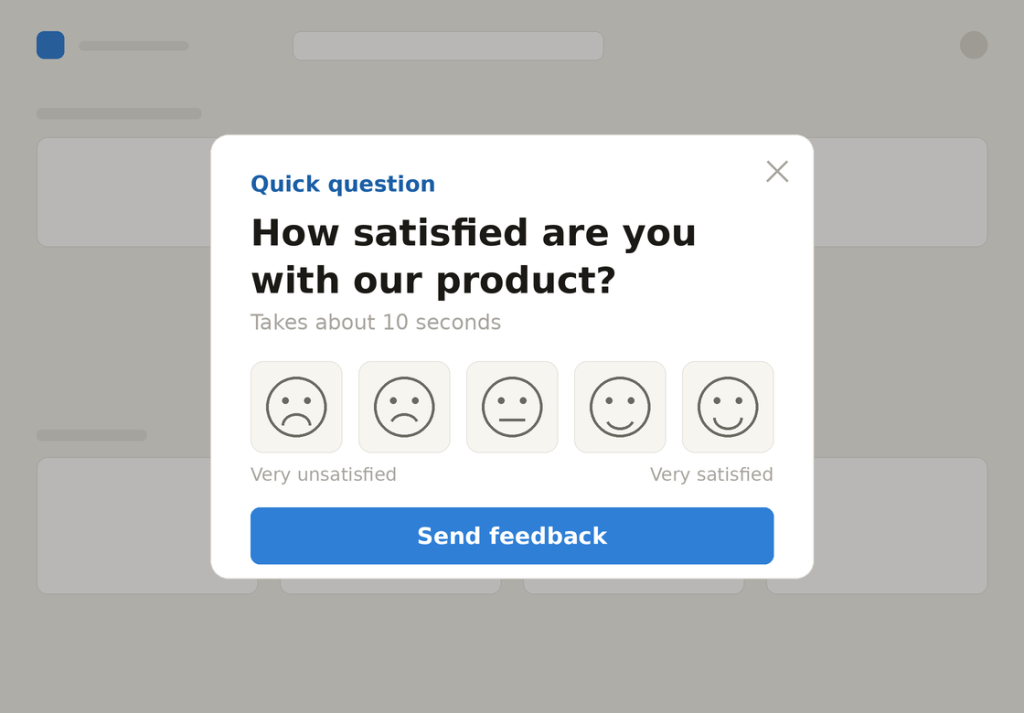
    “How satisfied are you with our product?”, asks a tiny popup on your screen. It is a survey to find out if the customer is satisfied with the product or not. You’d think, that is probably the easiest part of someone’s job. I used to think that too. Until one day, I found myself in a lengthy discussion with a Product Designer and a UX (User Experience) Researcher talking about the right questions for a survey.

    I was always interested in doing User Research. Although, I don’t have any formal training in User Research, I acquired the knowledge from online courses, Youtube videos and conversations with UX researchers.

    However, this particular instance stuck out for me, because like everyone else, I thought, I could do this in 30 minutes; it’s easy. Well, it was easy but not without the collaboration of my colleagues.

    Let’s unpack the story.

    I wanted to run a survey for our customers with an objective to understand their satisfaction level. While we had indicators on customer’s satisfaction, we did not have a quantitative measure in place.

    Before approaching my colleagues, I drafted the questions for the survey, believing it to be my best work. I sent it to my colleagues, a Product Designer and a UX Researcher. They came back with feedback that I was not ready for. Of course, my colleagues had provided the feedback in a highly constructive manner. But honestly, my first draft sucked.

    I knew this was the time to collaborate.

    We created a Slack channel between the three and jumped into brainstorming session. Later, we setup a meeting to ideate further.

    We asked multiple questions in our discussion:

    • Why are we running the survey? And why now?
    • What do we hope to achieve from the survey?
    • What type of survey should it be? Binary input? 5-point scale? 10-point scale?
    • How many questions should we ask?
    • Should there be an action for the user at the end of the survey?
    • How long should we run the survey for?
    • What if no one responds? What if too many people respond (we are dreamy, that way)?
    • What is the target response rate?
    • What do we expect to impact after the survey ends?

    Each of those questions had detailed discussion on separate tangents. In the interest of not lengthening this blog any further, I will not delve deep into the answers.

    In our discussion, I provided the hypothesis, the goal and the expectations for the survey. This was the most crucial part before we went to the questions. We refined our approach based on the hypothesis. We realised a single question will not suffice for our goal and customised it to our context.

    At the end of the survey, we had added a booking link for a meeting, just in case customers were interested in talking to us (it totally worked, by the way 🚀).

    Based on the past surveys, we understood that very few people actually respond to our in-app surveys. It was still the best option available for us to start. We used Hotjar tool for survey. We ran the survey inside the app for 4 weeks.

    During this time, I kept my team constantly engaged. I connected Hotjar and Slack to receive notification for every single response. Each day, I would login to Slack and check if we received any responses. Our mood of the day was dictated by the recent survey response. 🙂

    After 2 weeks, I initiated the evaluation of the responses. Thanks to my colleague who spent time analysing and visualising the responses. He created a document and we shared with our team.

    After 4 weeks, we re-evaluated our survey and changed questions based on our prior performance.

    Fun fact: Compared to our past surveys in the company, this survey received highest number of responses. 🔥

    As a Product Manager, my role was to take ownership and drive the team. I relied on the expertise of the team for most things. The UX researcher directed the correct approach for this survey. The Designer helped in creating the survey and presenting the results.

    I initiated the ideation phase, followed up on their work, prepared my proposal drafts with goal and hypothesis for ideation, kept the team engaged when survey was live, iterated on the survey questions and published the results to the teams.

    A Product Manager learns to leverage the cross-functional team’s strengths. Taking full ownership of the work is what you bring to the table daily.

    I have summarised this in the most practical way:

    1. Choose a tool. If you don’t have it then explore the tool.
    2. Draft a proposal document with the objective (why do you need this survey).
    3. Create your first version of survey questions. Don’t worry about polishing the content. Just write.
    4. Share this with your Designer/UX researcher and request a discussion. You can do this async or sync, it doesn’t matter. Now, if you don’t have those people in your team, you may have to go to someone who wears those hats.
    5. You can revise the questions. Simultaneously, refine the document; keep it updated.
    6. Create a plan with your team by using the above questions.
    7. Once it is ready, create the survey and run it.
    8. When the survey is active, analyse responses and constantly seek feedback from colleagues on the performance of the survey.
    9. Present the results to the team and include what customers are telling you about the product. Share the good, the bad and the ugly.
    10. Identify and document the changes required for next iteration.

    Check out the Designer and the UX researcher mentioned above. I am grateful to them.

  • Case Study: A neobank for gig workers

    Case Study: A neobank for gig workers

    I recently interviewed with a top fintech in India for their Product Manager role. As part of my interview, I worked on a case study for the problem statement given by the company. I have replaced the company name with BankNow. Apart from the brief problem statement, I had received a separate note on what they wanted me to include in this case study.

    The given Problem Statement:

    BankNow is a novel fintech that is trying to launch a neobank. A neobank is a 21st-century bank that doesn’t have any physical branch. You can read up more on what neobanks are here — https://en.wikipedia.org/wiki/Neobank

    BankNow is trying to create a salary account offering for the gig economy workers in India. They want this to be deployed in the form of an android app. The motive of this app is to become a hassle-free, powerful, defacto salary account for these employees.

    BankNow is seed-funded and has just raised $2 million from Famous Ventures. They have a team size of around 10 people based in Bengaluru and have raised funding basis their idea. The tech team size is about 3 backend + 2 frontend developers (1 web + 1 mobile)

    Let’s begin with a few concepts that I will be using often in this case study.

    Neobanks and Traditional Banks

    Traditional banks are the entities that hold the licenses to operate a full-fledged bank with credit products, cards, lending products, and have a physical presence.

    In contrast to that, Neobanks offer banking services via an online interface and have no physical presence. In fact, a few Neobanks do not have a license like a traditional bank, hence, they partner with a traditional bank.

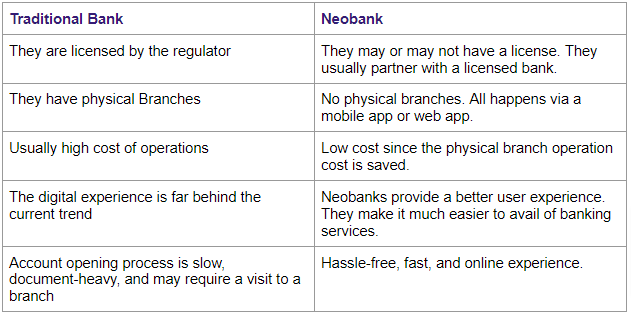
    Few key distinctions between the two:

    Comparison between traditional bank and neobank.

    Gig Economy

    A technology platform that connects a service provider with the service seeker. In this case, a service provider is a gig worker who can do that task. Examples: Delivery executives, cab drivers in ride-sharing apps, independent contractors for consumer services on platforms like Urban Company. Typically, this is not a conventional job where the employer takes care of most things like provident fund, health insurance, salary account provided, etc.

    Opportunities

    • Requires minimum, low skill-set
    • Quick employment option
    • Education is not a deterrent

    Risks

    • Job security
    • No employment contract hence labor laws may not always cover them.
    • Very limited banking services like loans.

    Salary Accounts and regular accounts

    Salary accounts, when compared to a regular savings account, have the following advantages:

    • Zero balance account. No Monthly minimum balance required.
    • No fees charged for not maintaining an average monthly balance.
    • Card issuance is not charged. A debit card is typically given for free.
    • No extra charges on the transfers or payments.
    • A credit card with income-based limits is given for 1 or 2 years for free.
    • Access to other financial products like Mutual Funds etc without much due diligence.
    • Interest on the account balance.

    Why is this context important?

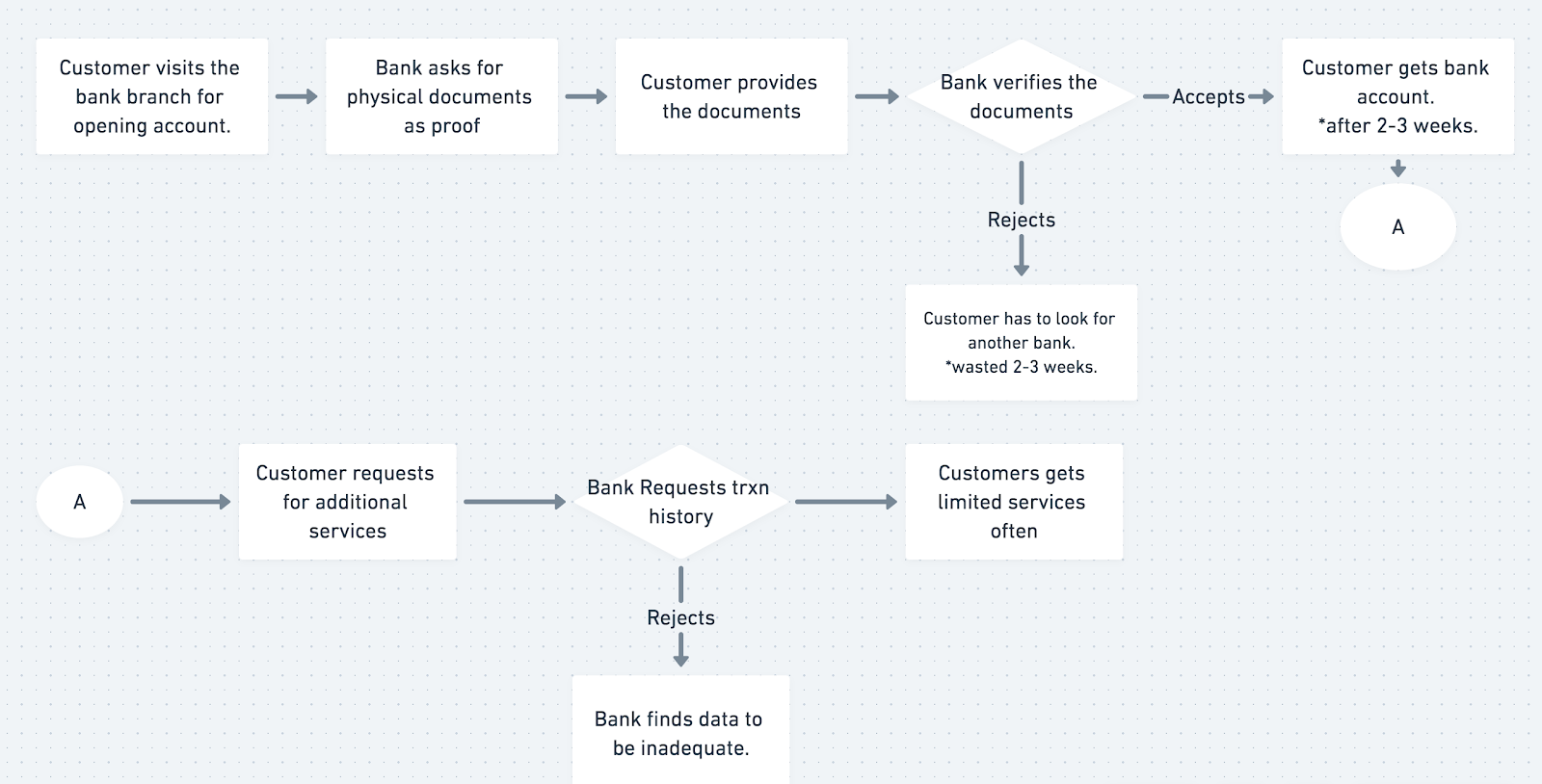
    Opening a bank account with a traditional bank is slow, requires heavy documentation, and tends to deny banking services to a gig worker because of their nature of work which comes with a certain risk.

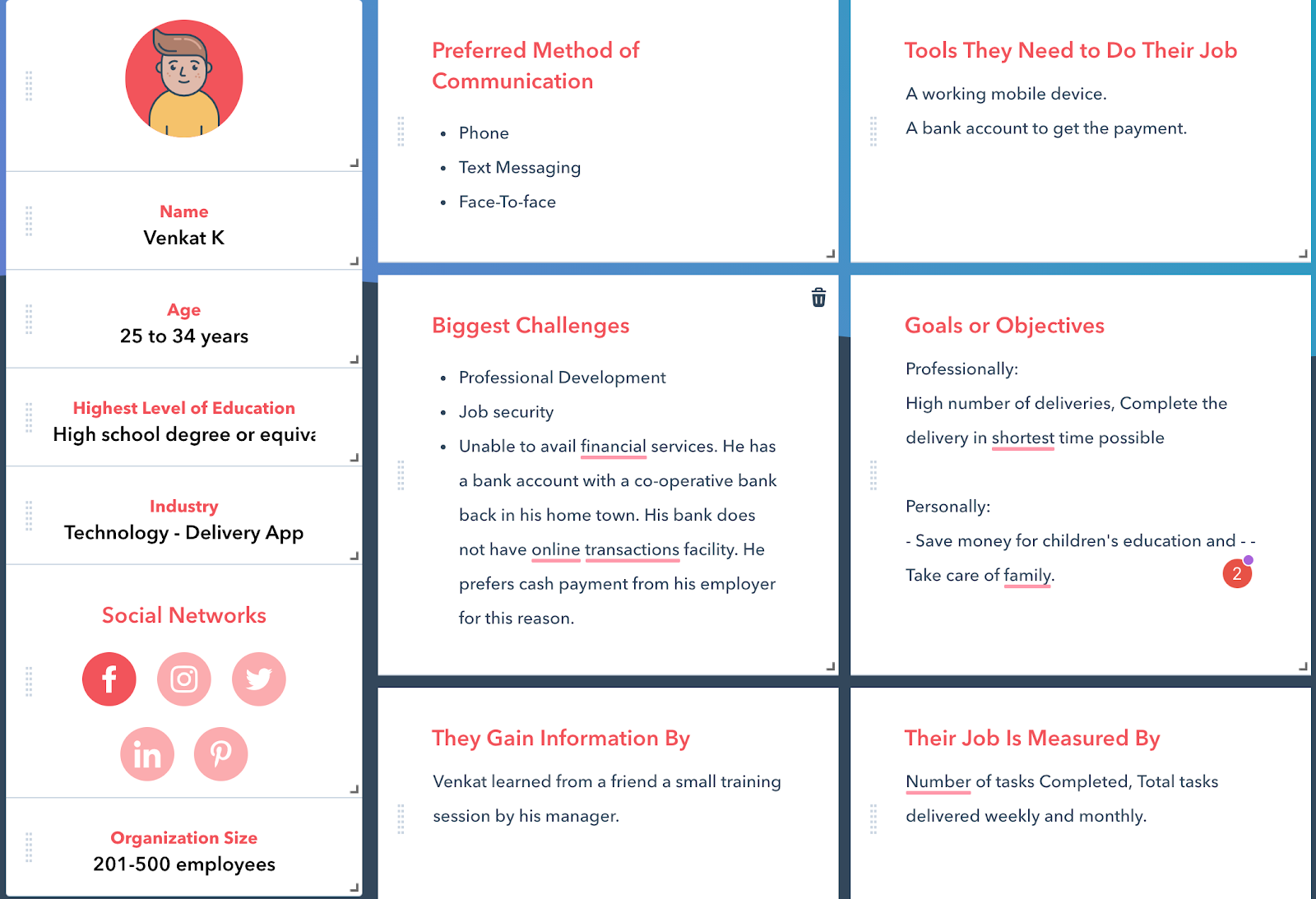
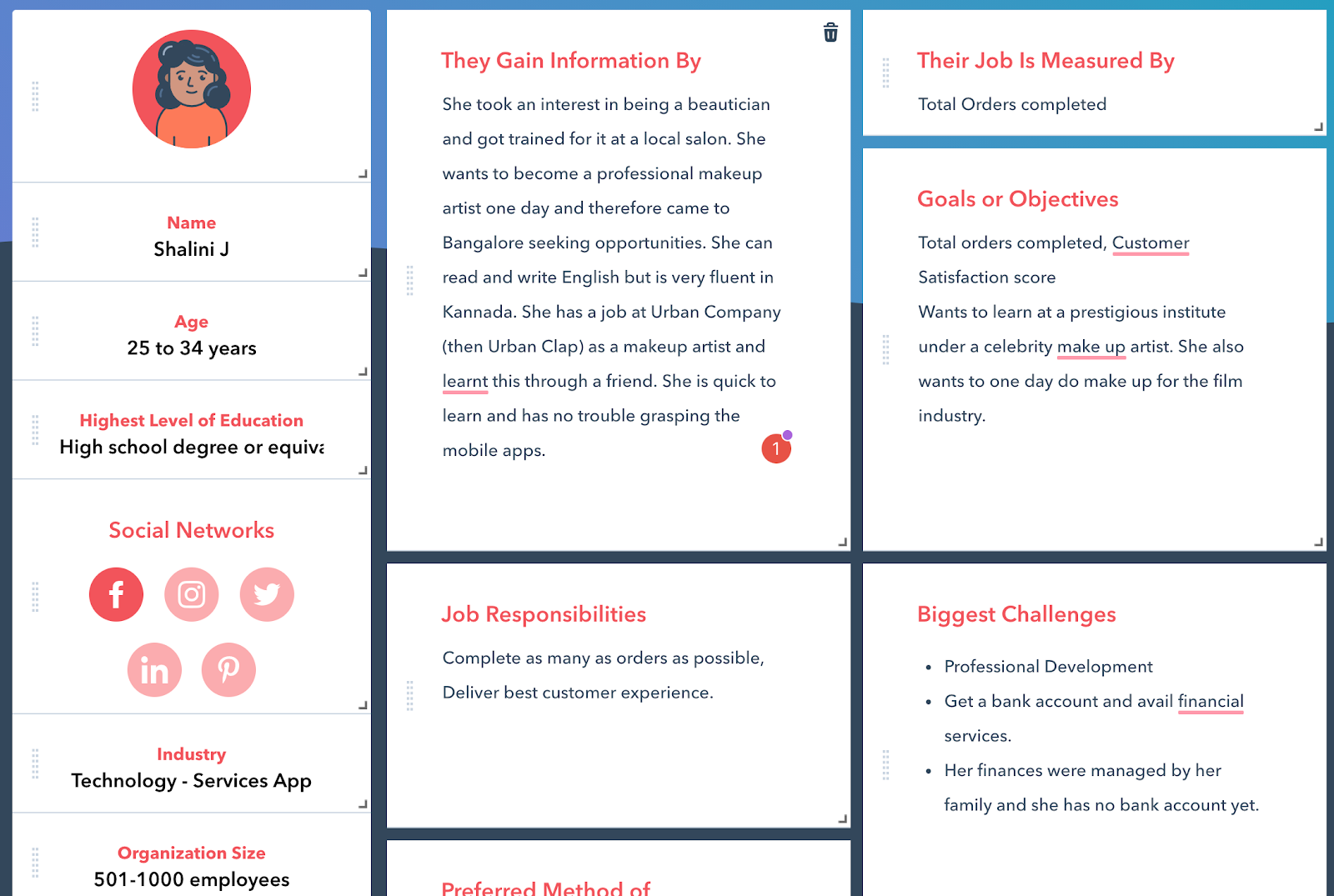
    User Persona

    Venkat K

    Shalini J

    Objective

    To give access to the best banking and financial services to the gig workers by means of providing a bank account with salary account benefits and other banking services hassle-free via a mobile application.

    Market Sizing

    Globally, the gig economy is expected to grow to ~USD 455Bn by 2023. Ref.

    Also, the neobank is on the rise since it is expected to grow to approx. USD 400Bn by 2026 globally.

    But the Indian market with a labor force in the urban areas is estimated to be 35 Mn and growing.

    To give perspective, UrbanCompany alone has grown from 3 Cr in FY16 to 142Cr in FY20 in revenue. Currently, they have 25,000 professionals or Gig workers on the platform. Ref.

    These are the indicators of rising gig workers and an opportunity for the product.

    Competitive Analysis

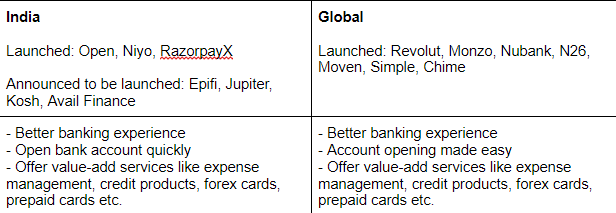
    The landscape for both the Indian and the Global players is almost similar whereby they challenge the existing banking experience, provide a better user experience, and bundle the value-add services to the customers.

    With all companies above funded heavily for their operations, it is apparent that neo-banking is definitely on the rise in India. This indicates an opportunity for the company to pursue this product.

    Scope

    – The gig economy is large and for the purpose of this case study, I am considering service providers like delivery executives and home services executives.

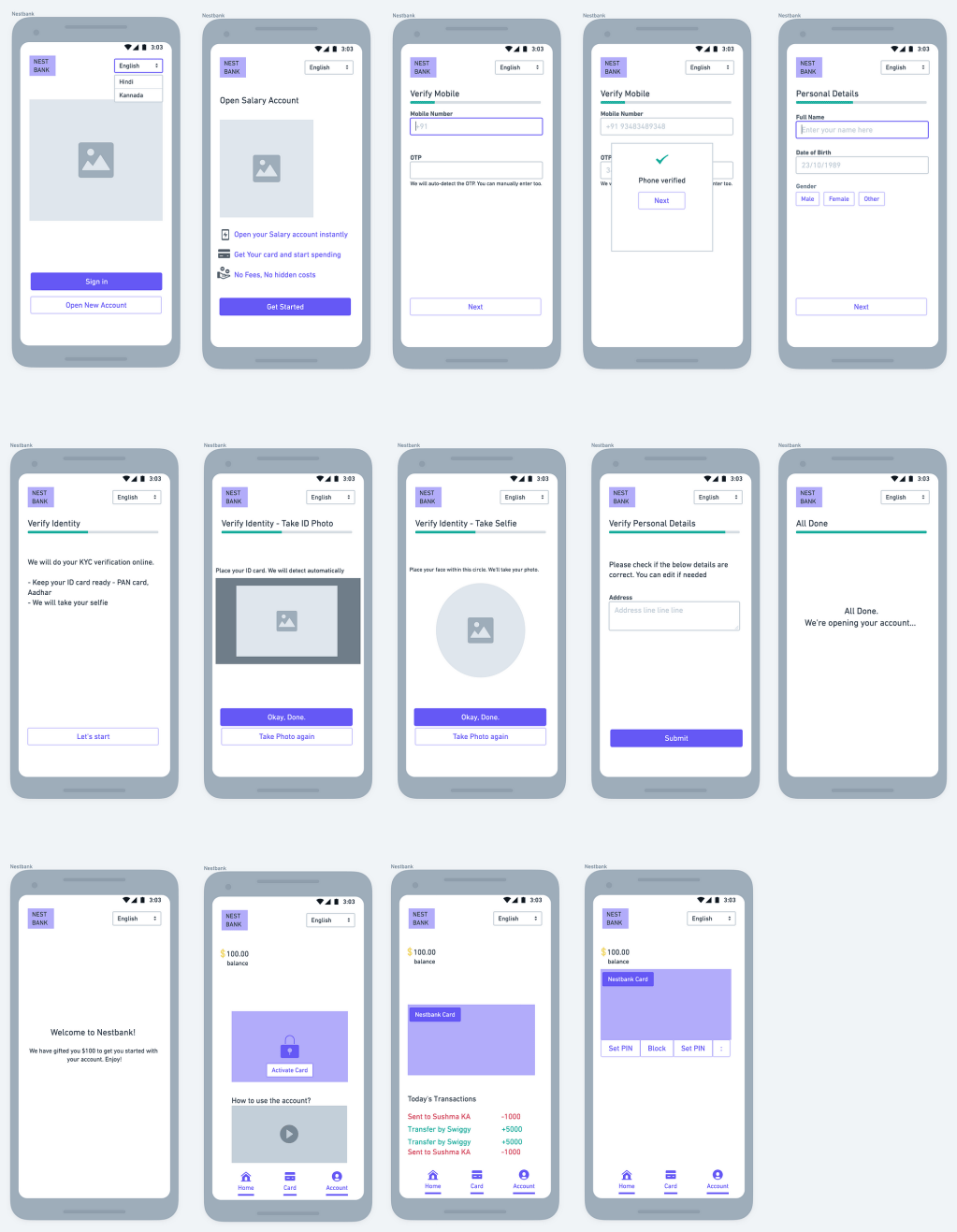
    – This case study will include the account opening experience for any gig worker who wants to get a bank account instantly.

    – For the purpose of this case study, I will cover the Indian market only.

    – The wireframes are done by keeping Android in mind. iOS platform is part of the product roadmap section.

    Assumptions

    – BankNow operates under the license of a partner bank since there are no specific guidelines by RBI on neobanks. Ref. In case the company holds the license, it will not have any significant impact on the user journey.

    – Users are connected to the internet, possess a mobile device with Android OS.

    – The current products available in the market are inadequate compared to the rising demand in terms of experience and service.

    Proposed Solution

    A digital bank account for the gig economy worker for a salary account available on the mobile application.

    Following are the key aspects that can be focussed on:

    • Onboard the user in the shortest time: Online KYC with minimum steps to get access to the account.
    • The instant virtual card on the account to get started on the usage.
    • Physical cards for the ATM withdrawals.
    • Attractive interest, No hidden fees.
    • No minimum balance commitment.
    • Account Management:
    • — Check the balance in the app
    • — Transfer money to friends and family from the app
    • — Manage and Control card from the app.
    • Finance Management
    • — Check your spends
    • — Categorize your spending and see if you are overspending.
    • — Receive important notifications over Whatsapp.

    Traditional Bank account opening flow:

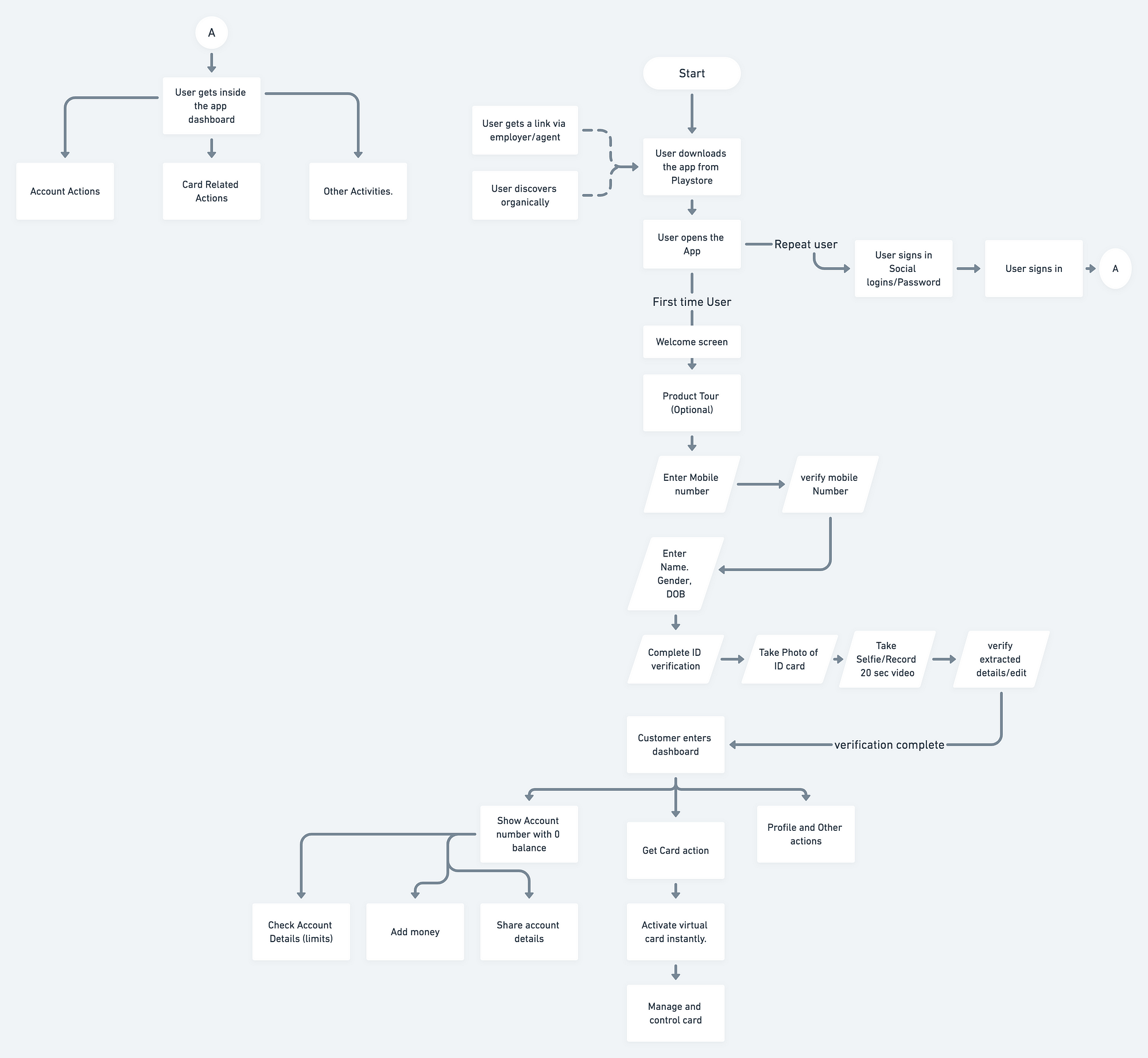
    Proposed Solution for the BankNow Account opening:

    Proposed solution for the banknow product

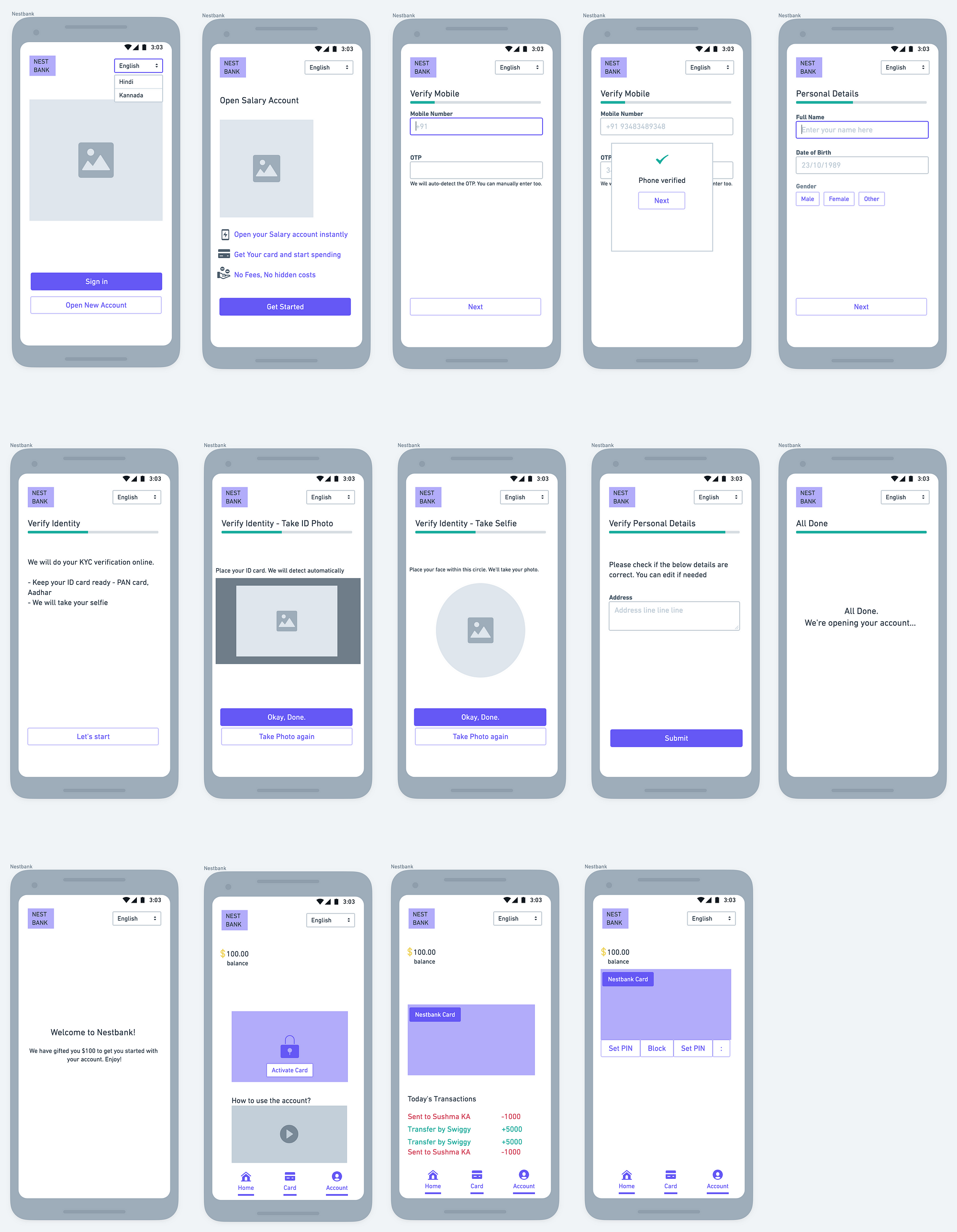
    Wireframes for the user’s journey:

    Product Marketing Note:

    While the actual copy for this note will depend on the product marketing team, these are the possible ways to attract customers.

    Customer Facing Copy:

    • Having trouble getting a bank account? Are you getting drowned in the documents? BankNow has you covered. All you need is an ID card and we do the rest for you.
    • Get your salary account within the blink of an eye. No more branch visits and no paper-work required!
    • BankNow Salary Account is hassle-free and cost effective! Download the app Now.

    For the Team:

    We give traditional benefits of a salary account in the modern banking app! With millions of people joining the gig economy each year, it is difficult to ignore the gig workers. But these workers are underbanked, unable to avail of financial and banking services. They are constantly on the move and they need a bank partner that moves with them.

    With BankNow’s neobanking solution, we offer Salary accounts to gig workers. Open accounts faster, get cards for spends and analytics, all on the mobile application. BankNow product aims to include gig workers in banking and financial services.

    Go to Market Strategy

    Launch with the mobile application to a specific segment.

    • Closed Beta Launch — One partner with a limited number of customers. (Beta is required for eliminating the initial hiccups)
    • Controlled public launch — Launch in tier 1 Cities. Partner with aggregators or gig job providers. Reason for tier 1 city — the gig workers are more likely to be tech-savvy and hence, faster adoption. In the first launch, target the likes of UrbanCompany, Swiggy, Runnr, and Dunzo.
    • Public Launch — Target all cities in India.

    Customer Acquisition

    I have listed down the following possible channels for customer acquisition while acknowledging that the initial launch will potentially spread via word of mouth.

    – Acquire users via partner tie-ups.

    – Channel Partnerships — Vahan, Blue-collar enabling platforms, payroll companies.

    – Partner with local banks. They can offer a digital banking experience and attract more users. Opportunity for them to onboard new customers with a better experience.

    – Partner with local/national unions for the specific task force — Drivers have their Unions.

    However, out of the above, I would prefer a partnership with the service platforms themselves like Uber, Swiggy, Dunzo, UrbanCompany, etc.

    Metrics and Tracking

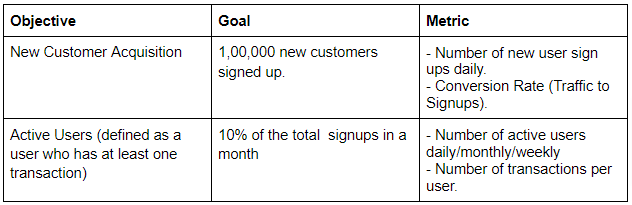
    The goal of the Product: Acquire 1,00,000 customers in 1 year. (Includes beta launch)

    The key Indicator will be Month on Month growth in new customers.

    goals and metrics

    Product Roadmap

    At Launch (Jan 2021)Mobile App
    Open salary account instantly with eKYC
    Virtual Cards
    Phase 1 — (Jan — Mar)Physical card order flow in the app.
    Local language support
    Phase 2 — (Mar — July)Rewards on card spends
    Spend Analytics
    iOS platform
    Phase 3 — (July — Dec)The first version of the lending product.

    Disclaimer: This case study is my personal work and in no way borrowed or copied. However, I did use the web and books for research and inspiration.

  • Why our washing machines are stuck in the past? I have a crazy idea

    Why our washing machines are stuck in the past? I have a crazy idea

    It’s weekend. You get up late, and decide to go out for brunch. You go to the wardrobe and it hits you, “I don’t have fresh clothes to wear.” Your pile of clothes has been sitting in the basket for a week and you procrastinated the task. This happened to me recently. I wondered, “why do we have to do laundry every week?” Why can’t the washing machine just take the dirty clothes and do it by itself.

    And here we are. This is my experiment with writing down moonshot ideas. I particularly chose physical products because it pushes me to think different. I have been working on software products for many years and rarely I paid attention to the physical products around me. Over the years, I’ve been noticing that the gap between the physical and the digital products is minimising. We have app-controlled home devices like vacuum cleaners, light bulbs, electric vehicles etc. It will only get better from here.

    Back to my laundry problem. While there may be a segment of population that enjoys doing the laundry, I completely hate it. I dread the day I have to do the laundry.

    Sure, we have come a long way from walking miles to a source of water and washing our clothes with hands. Those days are in the past. Being in tech, I cannot help but think, “why is our laundry stuck in the ancient past?”

    Let’s see a typical person’s journey doing laundry:

    You take off your dirty clothes and throw them in the laundry basket → You choose a day to sort the clothes and dump them in the washing machine → Load the detergent → Choose the wash cycle and run it → If you have separate dryer then transfer the clothes to the dryer → You take the clothes out → Fold the clothes.

    You repeat this either daily, weekly or even monthly.

    A frustrated person doing laundry. Image generated via Canva.

    All we need is fresh clothes, washed and dried. This is literally our goal.

    What if…We completely redesign our laundry experience.

    After shower, throw the clothes in the machine. Your machine takes care of the rest. All you need to do is take the folded clothes and keep it in the wardrobe. (Of course, you can have a robot to do this for you, but one idea at a time).

    I just want to dump my dirty clothes daily in one section. The machine should be able to sort the clothes in different piles based on fabric type and color.

    After a pile is sufficiently full, the machine chooses to load them in the washer. The washer can have its own intelligence for choosing a specific cycle and loading the detergent as required from an attached bottle.

    Once the washing is done, the dry cycle can start.

    After the clothes are dried, it should move the clothes to next section to fold the clothes. This is optional, in my opinion. Because our goal is to have fresh laundry, folding is a bonus!

    That’s it! That is my idea.

    If you notice every step here has the potential to make it more efficient. The sorting stage can be made very sophisticated. The washing part itself can be optimised for efficiency and energy consumption. The possibilities are endless!

    How to implement this and how does this work? I have no idea. However, I am not looking at feasibility of this product. It is just a crazy idea and I want to document it. I hope that one day someone will find a solution.

    Anyway, just for fun, I used AI to generate this dreamy machine for me. Here is the image and I don’t know what to think of it:

    AI generated image for all-in-one machine

    What would have been your prompt for AI to give the most accurate image?

  • How can a Product Manager contribute during a major issue in system

    How can a Product Manager contribute during a major issue in system

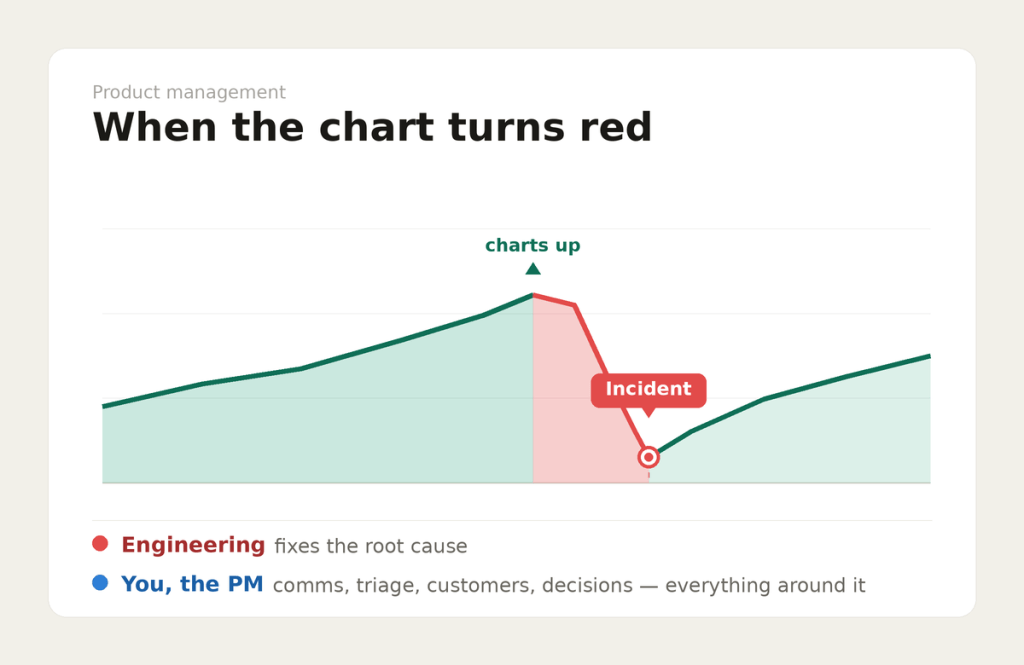
    Let’s face it, as a Product Manager, you have your own glory days when all charts are pointing upwards but you cannot avoid issues or incidents, as we all like to call it. While only the engineering team can fix the issues, the other teams can indirectly contribute. So let’s talk about, how you, as a Product Manager, can add value when such incidents occur.

    Before we dive in, let’s create a hypothetical incident:

    Let’s say, your company sells some beauty products online (e-commerce site). Customers are completing the orders but your internal dashboard is showing “payment pending.” However, you can see successful payments in the Payment Gateway’s dashboard. The issue seems to be only with the internal dashboard. Now this is causing an issue for downstream in all the workflows that are dependent on your Admin dashboard’s status; especially order fulfilment teams.

    Incident analysis: What’s really happening here?

    First things first, try to get a sense of what is happening here. You will have to work with the the Engineering Manager or whoever is leading the team to fix it. Identify the people that are working on this as a first step.

    Next, try to understand the issue better. This is where your technical knowledge will help you. If you don’t understand, then research on the topic and gain more knowledge on it. Sometimes a simple Google search or a question to ChatGPT might help.

    In this case, you might have to learn a bit more about how exactly the order status gets updated when the payment is successful. Also, you might have to find out more about how APIs work.

    Document the knowledge that you have collected on the issue as much as possible.

    Here are few questions you can answer:

    1. What is the incident exactly?
    2. When did the incident occur?
    3. Do we know if this incident has occurred earlier? If yes, is there any past documentation on how it might have been solved?
    4. Who noticed it first and how was the issue reported? (This information will be helpful later to devise a mitigation plan).

    Key Takeaway: Get to the depth of the incident and document initial findings.

    Impact analysis: How does it impact the customers and the company?

    Depending on the severity of the incident, the impact will be different. It may impact the entire product bringing everything to a standstill or it may be small part of the workflow. It might affect customers directly or only the internal teams’ workflows.

    To analyse the impact, work with your engineering team. In our hypothetical scenario, we might discover that only payments from Country X are affected, rest of the payments work fine.

    Document everything you notice during this analysis.

    Here are some more questions to look at:

    1. Is the customer impacted directly? If yes, which part of the product are they not able to use?
    2. What is the criticality of the impact? In our example, not being able to see the updated payment status is more critical than not being able to download the order receipt.
    3. Which teams should be informed about this incident?
    4. Do we know why it occurred? At this stage, you may or may not know the root cause. If you know the cause, write it down. If you don’t, then move on to the next thing.

    Your work does not end here. In fact, it has only begun. So buckle up.

    Key Takeaway: When doing impact analysis, look at all angles and every part of the workflow. You can perhaps, create a checklist.

    Mitigation plan:

    In most situations, it is very likely that the team needs more time to fix the issue. However, you have to look for alternate solutions because you cannot let the workflow stop.

    For different problems, the alternatives will be different and this is something you can work out with Engineering team and the team that is heavily impacted. In our example, you will be talking to Engineer and Operations team to come up with an alternative. Since we get the status of the payment in the Payment Gateway’s dashboard, can that be used directly? Can we manually update something? Can we have an engineer to manually make updates to the database until issue resolution?

    You get the drift. Some solutions are obviously going to sound stupid but that is exactly why you are brainstorming with the team. You need to drive these discussions to fruition.

    Key Takeaway: Look for the shortest possible path to alternate solution that will work. In some cases, it may be advisable to just wait until the issue is fixed.

    Communication Plan

    This is where you contribute the most. All the documentation that you did in the previous steps will be put to use here.

    Firstly, setup a communication line with your Engineering Team.

    The Engineering Manager or team lead will be your point of contact. Be in touch with them on a regular interval that you both are comfortable with. Tip: Don’t go asking “what’s the update?” every 5 mins. Instead, enable the team to use common channels.

    Secondly, prepare the communication with the internal teams.

    Thirdly, partner up with the marketing team or equivalent team to draft customer-facing communication. This is required only if the customers are directly impacted. In our example, we won’t need to do it.

    What should you communicate?

    Talk to your teams as if they are your friends. This means, you automatically cut out jargons and tech-heavy phrases. No matter what medium of communication you choose, you can always include following components:

    • What is the issue?
    • What caused this?
    • What is the impact?
    • When will it be fixed?
    • How do we mitigate or handle until fixed?

    Be candid and open about the issue. Keep the message short. Keep the language as simple as you can.

    For example, instead of saying, “the status is not getting update because the webhook is giving 500 gateway error”, tell them, “Every time a payment is successful, our payment gateway partner sends the notification to us and we update our admin dashboard. But in this case, we are not getting this notification.”

    Post fix:

    Create an Incident Report with full details. Generally, Engineering Team works on this. You can either choose to use the same or create your own with simplified language.

    If you had a customer-facing incident, then team up with Engineering and Product Marketing Teams and draft an incident report. Some startups may not have specialised roles and therefore, you might be the only person to handle all communication.

    What if you don’t know the root cause or the estimate to fix it?

    Let’s admit, communication is hard. It is hard especially when you don’t have any updates to give. For example, even after 2 hours of debugging, the team is not able to find out what went wrong. However, you still have to respond to stakeholders.

    I try to take approach of “as is” update. This means, you don’t have to fabricate any story but tell exactly how things are going.

    For example, your update could be, “At this point, we do not know what is causing this issue. Our team of 4 members has been on it for the past 2 hours. They have their suspicions of what might be causing it but yet to confirm. Here is the plan of action in the meantime…“

    You can take this time to inform the team about the alternate solution and prepare them to adopt it until then.


    My mistakes from the past:

    • Mistake #1 — At times, my only update was “We are fixing it.”

    This gave no confidence to the team because I am not telling them what is the issue, how long they have to wait, how can they mitigate. When there is a bug in the system, we all have a tendency to treat it as our personal failure. We fail to acknowledge that no product is perfect and failures are inevitable. Avoid doing this.

    • Mistake #2 — Not being transparent about requiring help from others.

    You can use help from other PMs, or teams that have dealt with such issues. In my initial days, I tried to do it all by myself and suffered. Avoid doing this and seek help.

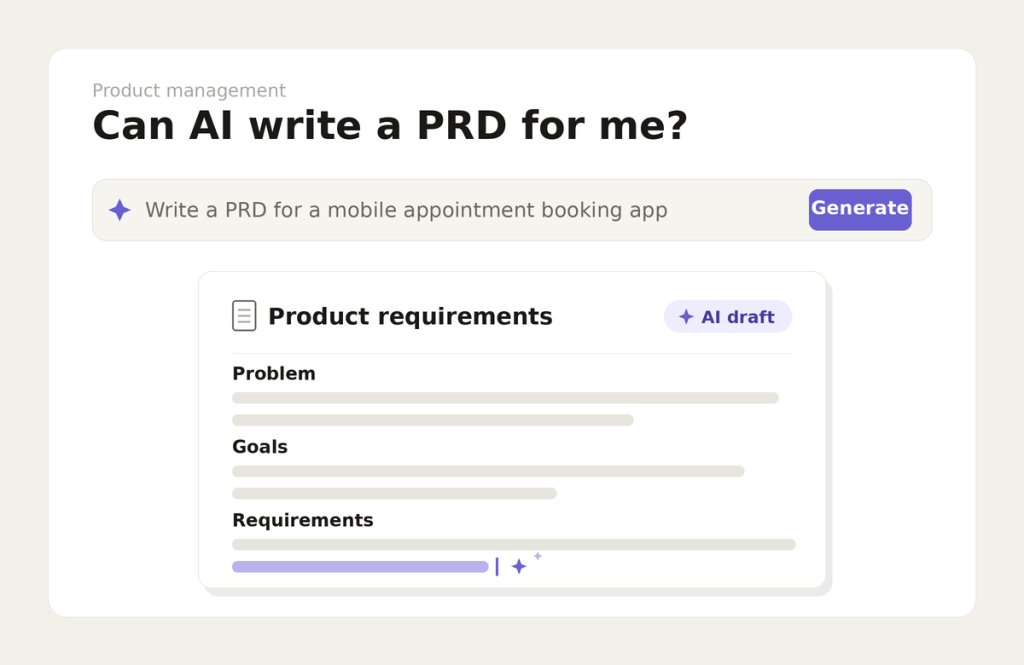
  • Can AI write a PRD (product requirement document) for me?

    Can AI write a PRD (product requirement document) for me?

    If you are a Product Manager and you like solving problems but dislike the documentation part, you will enjoy this post.

    A PRD or Product Requirement Document is like holy text for tech companies. Well, at least Product Managers would like to believe so, whether it is true or not.

    Albeit, at some point in your life you have written PRD voluntarily or involuntarily.

    What if someone else wrote it for you?

    Enter OpenAI.

    Usually, on weekends I play around with different products to experience and learn something new.

    I went to https://beta.openai.com/playground and created a PRD using AI.

    Without giving any thought to what I wanted, I typed in my 1st Prompt:

    Write a product requirement document to build a dashboard that helps the admin users to manage new e-commerce orders.

    Here is what AI wrote:

    The admin users should be able to:
    — See all the new orders
    — Filter the orders by their status
    — Update the status of the orders
    — Delete the orders
    — Export the orders to a CSV file

    This is how I would write PRD about 8 years back when I had no knowledge of Product Management.

    It was kind of underwhelming.

    I revised the prompt and typed this:

    Write a product requirement document that contains Success metrics, scope, assumptions, and goals to build a dashboard that helps the admin users to manage new e-commerce orders.

    Did you notice how I inserted the keywords like scope, goals for the AI to know that it should be considering those things?

    Here is the result:

    The admin users should be able to:
    - See all the new orders
    - Filter the orders by their status
    - Update the status of the orders
    - Delete the orders
    - Export the orders to a CSV file
    Success metrics:
    - The admin users are able to see all the new orders
    - The admin users are able to filter the orders by their status
    - The admin users are able to update the status of the orders
    - The admin users are able to delete the orders
    - The admin users are able to export the orders to a CSV file
    Scope:
    - The dashboard should be built using React
    - The orders should be fetched from an API
    Assumptions:
    - The API is already built and returns the necessary data
    - The admin users are already familiar with React
    Goals:
    - The admin users should be able to manage new orders easily
    The admin users should be able to export the orders to a CSV file

    This has not blown my mind yet but it has the potential to write amazing documents.

    One very interesting thing to consider, if it is “learning” from available data sources, then is it plagiarising content? Because some of the lines in the result are very specific eg. “The dashboard should be built using React.” Why React, why not Angular or Vuejs?

    If AI truly has future, I will soon enough have to be expert at giving prompts to the AI and let it do the hard work; which I loathe anyway.

    We will wait and watch where it goes from here.


    What do you think of my PRD? And what fun thing have you tried with AI? Share in comments.

    See the PRD here:

    https://beta.openai.com/playground/p/tRbZyvx1CYiL19zlo1SWspyf?model=text-davinci-002