Put the cap back on and Ahhh! Some detergent leaks out.
Now, take this Detergent Bottle Cap. Do you notice anything different?
It’s brilliant design.
It looks like a no-brainer and yet, you don’t see it everywhere.
It is not a ground breaking invention. Perhaps, no one even notices it. It makes an impact on your daily routine for just a fraction of second. To me, such designs are very impactful and thoughtful.
Designing a user-friendly bottle cap doesn’t directly increase revenue. Consumers don’t choose a brand solely for its superior cap design. Yet, companies invest time and effort to enhance these small details, making your life a little easier.
Until I read the book, “Design of Everyday things” by Don Norman, I never paid attention to the design of physical products. And until I became a product manager, I never really paid attention to the design of digital products either. But now, I think about product’s design all the time.
You might think, “How hard can this be? It’s just a bottle cap.
“While that’s mostly true, manufacturing physical goods is quite challenging. It involves long, tedious processes. You can’t simply change the design in your cool software and expect to release it in the next batch. Digital products, on the other hand, have that advantage of “rolling back” a release when it doesn’t meet expectations. With physical goods, you can’t simply roll back—there are dependencies from design to production phase.
Most manufacturing companies often outsource the production of certain parts. You design a part, create specifications for it, send it to your manufacturing unit. Now, this unit needs to support the design. If the manufacturer does not have the right equipment, they have to procure it. It is not same as spinning up another server with a single line of code or one-click action to scale up your digital product. Of course, I am over simplifying here but you get the idea.
When you take into account all these factors, you suddenly realize it may not have been an easy task to push such a design into production, especially when most detergent bottles in the market come with a standard cap.
Of course, once it becomes a standard design, it makes waves, and production becomes much easier.
So if you cannot change design on the fly, how do you iterate? How does the team validate the design choice?
Interestingly, digital and physical products share similarities in this aspect. You don’t always need to go straight to production. Instead, you can test your concept by creating a prototype—a working model that illustrates the user’s experience. This prototype serves as a tool to validate both your design and concept.
There is a cool video on Youtube on how car companies use clay modeling to experiment with design concepts.
Digital products also have prototypes. Check this prototype from Figma Community member. You can interact with a mobile app design without involving the software developers.
But, I digress.
For now, my detergent bottle has impressed me. It solves a tiny problem in my life and I derive immense satisfaction from it. Their core product is already good but design like this makes me go “Aha😊.” That’s the moment you want to have from your customers.
“Why should I worry about the pricing strategy?” I asked my manager during a conversation.
A bit of a story.
I had taken up the ownership of a newly launched product. While we had basic pricing model in place, we had to re-evaluate our pricing strategy for new market launches. My manager asked me to come up with a proposal. At first, I resisted because I always assumed it was someone else’s job. After a long conversation with my manager, in which he explained why should a Product Manager think about the pricing strategy. You are the best person to understand core offerings of the product and the customer problems it solves. Therefore, devising a pricing strategy or ability to propose a pricing strategy is very much part of the job.
That was my cue to start learning all about the pricing strategies and monetisation models. I bought the book Monetising Innovation by Madhavan Ramanujam and Georg Tacke. I watched countless videos on this topic from Y Combinator and other channels. I scouted the internet for any blog from startup founders and CPOs who had done this before. I was curious about both failure and success stories. I particularly remember an excerpt from Rahul Vohra’s interview. Link
While I could not contribute to the pricing strategy at my previous company, I got a chance to work on a case study during my interview with one startup in Amsterdam.
How to approach Pricing Strategy for Marketplace
In this blog, I am laying out my framework and the approach I took. I am not aiming to provide exact answers because the assumptions and hypotheses may be different depending upon the context.
Disclaimer: I cannot disclose the name of the company, so let’s call it Narnia.
Here is the case:
Narnia is a marketplace for buyers and sellers of agricultural goods. It is a new platform and has commitment from few customers to use it in the beta mode. Narnia wants to start with one or 2 products initially and then expand in different categories. Devise a monetisation model with hypotheses and validations. Monetisation model should include 1) Who to charge and 2) How to charge (pricing model).
Here is what I would do:
→ Understand the market and the players
→ Understand the core value proposition of the platform
→ Describe the pricing strategy and the model
→ State the hypotheses and validation methods
Understand the market and the players
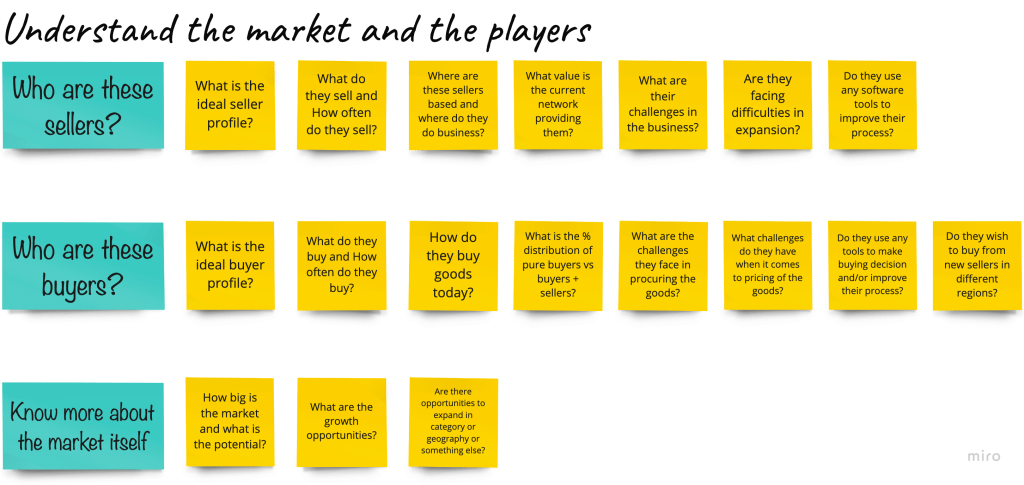
Since we know this is a marketplace for sellers and buyers of the agricultural goods, let’s start with them. Find out more about them.
Who are these sellers?
What is the ideal seller profile?
What do they sell and how often do they sell?
Where are these sellers based and where do they do business?
What value is their current network providing them?
What are their challenges in the business?
Are they facing difficulties in expansion?
Do they use any software tools to improve their process?
Who are these buyers?
What is the ideal buyer profile?
What do they buy and how often do they buy?
How do they buy goods today?
What is the % distribution of pure buyers vs buyers + sellers?
What are the challenges they face in procuring the goods?
What challenges do they have when it comes to pricing of the goods?
Do they use any tools to make buying decision and/or improve their process?
Do they wish to buy from new sellers in different regions?
Know more about the market itself
How big is the market and what is the potential?
What are the growth opportunities?
Are there opportunities to expand in category or geography or something else?
During this initial discovery phase, you may need data from both primary and secondary sources. This means if you have access to the sellers and buyers, talk to them! Else you can rely on readily available data from companies who may have done this research before.
Understand the core value proposition of the platform
Ask this “What core need of these sellers and buyers is the platform satisfying?”
Identify the journey of the seller and the buyer. Put a pin on a potential opportunity as you do this.
Does the platform have competitors? (If yes, just note them as threats. This is not an issue but it is good to be aware of).
Are there other platforms with exact same solution?
If yes, what do they offers?
If no, why has anyone not done this before? Is that a risk to be aware of?
If the product is already built, then how does the flow look like? If it is not built then draw out the ideal journey of the customer on the platform on a whiteboard.
What part of the product the customer cannot live without? Knowing this will help the team focus on the right things.
If this platform did not exist, what were their current alternatives? Do they use only their existing network and nothing else?
Describe the pricing strategy and the model
This is where you will put your knowledge from the product discovery phase to use. By now, you would have identified the customer’s problems, platform’s value proposition and the growth opportunities.
It is time to propose!
Option 1: You could say, we should “Charge the Seller”{Who to charge?} a “% commission on each transaction.”{How to charge}
OR
Option 2: You could also say, we should “Charge the Seller and the Buyer” a “% commission on each transaction.”{How to charge}
This is not the only way to do pricing but whatever you choose to propose should be backed up with hypotheses. This brings me to the next section.
State the hypotheses and validation methods
Let’s take Option 1 → Seller is charged % commission per completed transaction.
Following are my hypotheses:
Why charge the Sellers?
Sellers find value in the marketplace and are able to sell goods at a better price because of data-driven insights and recommendations of Narnia.
Sellers are able to discover new demand and have the potential to expand their business to new regions.
Why not charge Buyers?
Driving demand on the marketplace is crucial for initial phase to get the wheel running, and charging buyer would create an entry barrier.
Buyer’s core need is to look for the cheapest and most valuable product versus seller’s core need is to get rid of the supply; unsold supply is often costly to maintain.
Charging buyers will be difficult to scale because it needs huge volume of buyers to make money.
Why this pricing model?
Narnia can scale their profits with Seller’s transactions growth.
Sellers will have a lower barrier to entry because of no prior commitment to pay.
Sellers are incentivised to engage with the platform before committing to pay; e.g. listing supply.
Other model:
We could explore Subscription or fixed cost based model. However, I feel it will limit the potential of Narnia in earning more despite the Seller’s transaction growth.
If you think about it, successful marketplaces like Amazon often charge the Seller on the platform and not the buyer. However, there are marketplaces that charge both seller and the buyer.
Now for each of these hypotheses, I added validations. Validations had quantitative and qualitative methods.
Think about it. You suggested that we should charge the seller and not the buyer. Which performance indicators can be monitored to determine whether the pricing strategy works or not.
Here is an example:
Hypothesis: Sellers find value in the marketplace and are able to sell goods at a better price.
Indicators: Increase in new and repeat transactions, Able to sell at better price.
Validation
Quantitative data:
a) Analyse the transactions and find the delta between the listed price, bidding price, Narnia recommended price and actual selling price of the goods. The % difference should indicate if sellers got more or less price for goods than expected.
b) Track growth in new and repeat transactions for each seller. Ideally, there should be upward trend.
Qualitative data:
Gather subjective inputs as much as possible by interviewing every customer and ask if they find valuable to be on the marketplace and what more do they expect.
I had more hypotheses and validations which I have not purposely listed in this blog else it will be too big. You get the picture.
Document the threats and risks to your model
In which scenario is the pricing model likely to fail?
What can cause the drop in transactions?
Will customers prefer another pricing model? Do we have feedback from the customers to make us think in entirely different direction?
Is the pricing strategy not aligned with the business strategy?
An example of one such risk: Commission model will make money only when there are substantial number of transactions, Narnia may make money only in the long run, not immediately.
It is hard to say if this strategy will work or not. Much of Product Manager’s work is dependent on the company and its context. I am currently researching on ways to test my pricing strategy framework and do it myself. Your ideas are welcome.
“How satisfied are you with our product?”, asks a tiny popup on your screen. It is a survey to find out if the customer is satisfied with the product or not. You’d think, that is probably the easiest part of someone’s job. I used to think that too. Until one day, I found myself in a lengthy discussion with a Product Designer and a UX (User Experience) Researcher talking about the right questions for a survey.
I was always interested in doing User Research. Although, I don’t have any formal training in User Research, I acquired the knowledge from online courses, Youtube videos and conversations with UX researchers.
However, this particular instance stuck out for me, because like everyone else, I thought, I could do this in 30 minutes; it’s easy. Well, it was easy but not without the collaboration of my colleagues.
Let’s unpack the story.
I wanted to run a survey for our customers with an objective to understand their satisfaction level. While we had indicators on customer’s satisfaction, we did not have a quantitative measure in place.
Before approaching my colleagues, I drafted the questions for the survey, believing it to be my best work. I sent it to my colleagues, a Product Designer and a UX Researcher. They came back with feedback that I was not ready for. Of course, my colleagues had provided the feedback in a highly constructive manner. But honestly, my first draft sucked.
I knew this was the time to collaborate.
We created a Slack channel between the three and jumped into brainstorming session. Later, we setup a meeting to ideate further.
Should there be an action for the user at the end of the survey?
How long should we run the survey for?
What if no one responds? What if too many people respond (we are dreamy, that way)?
What is the target response rate?
What do we expect to impact after the survey ends?
Each of those questions had detailed discussion on separate tangents. In the interest of not lengthening this blog any further, I will not delve deep into the answers.
In our discussion, I provided the hypothesis, the goal and the expectations for the survey. This was the most crucial part before we went to the questions. We refined our approach based on the hypothesis. We realised a single question will not suffice for our goal and customised it to our context.
At the end of the survey, we had added a booking link for a meeting, just in case customers were interested in talking to us (it totally worked, by the way 🚀).
Based on the past surveys, we understood that very few people actually respond to our in-app surveys. It was still the best option available for us to start. We used Hotjar tool for survey. We ran the survey inside the app for 4 weeks.
During this time, I kept my team constantly engaged. I connected Hotjar and Slack to receive notification for every single response. Each day, I would login to Slack and check if we received any responses. Our mood of the day was dictated by the recent survey response. 🙂
After 2 weeks, I initiated the evaluation of the responses. Thanks to my colleague who spent time analysing and visualising the responses. He created a document and we shared with our team.
After 4 weeks, we re-evaluated our survey and changed questions based on our prior performance.
Fun fact: Compared to our past surveys in the company, this survey received highest number of responses. 🔥
As a Product Manager, my role was to take ownership and drive the team. I relied on the expertise of the team for most things. The UX researcher directed the correct approach for this survey. The Designer helped in creating the survey and presenting the results.
I initiated the ideation phase, followed up on their work, prepared my proposal drafts with goal and hypothesis for ideation, kept the team engaged when survey was live, iterated on the survey questions and published the results to the teams.
A Product Manager learns to leverage the cross-functional team’s strengths. Taking full ownership of the work is what you bring to the table daily.
I have summarised this in the most practical way:
Choose a tool. If you don’t have it then explore the tool.
Draft a proposal document with the objective (why do you need this survey).
Create your first version of survey questions. Don’t worry about polishing the content. Just write.
Share this with your Designer/UX researcher and request a discussion. You can do this async or sync, it doesn’t matter. Now, if you don’t have those people in your team, you may have to go to someone who wears those hats.
You can revise the questions. Simultaneously, refine the document; keep it updated.
Create a plan with your team by using the above questions.
Once it is ready, create the survey and run it.
When the survey is active, analyse responses and constantly seek feedback from colleagues on the performance of the survey.
Present the results to the team and include what customers are telling you about the product. Share the good, the bad and the ugly.
Identify and document the changes required for next iteration.
Check out the Designer and the UX researcher mentioned above. I am grateful to them.
I recently interviewed with a top fintech in India for their Product Manager role. As part of my interview, I worked on a case study for the problem statement given by the company. I have replaced the company name with BankNow. Apart from the brief problem statement, I had received a separate note on what they wanted me to include in this case study.
The given Problem Statement:
BankNow is a novel fintech that is trying to launch a neobank. A neobank is a 21st-century bank that doesn’t have any physical branch. You can read up more on what neobanks are here — https://en.wikipedia.org/wiki/Neobank
BankNow is trying to create a salary account offering for the gig economy workers in India. They want this to be deployed in the form of an android app. The motive of this app is to become a hassle-free, powerful, defacto salary account for these employees.
BankNow is seed-funded and has just raised $2 million from Famous Ventures. They have a team size of around 10 people based in Bengaluru and have raised funding basis their idea. The tech team size is about 3 backend + 2 frontend developers (1 web + 1 mobile)
Let’s begin with a few concepts that I will be using often in this case study.
Neobanks and Traditional Banks
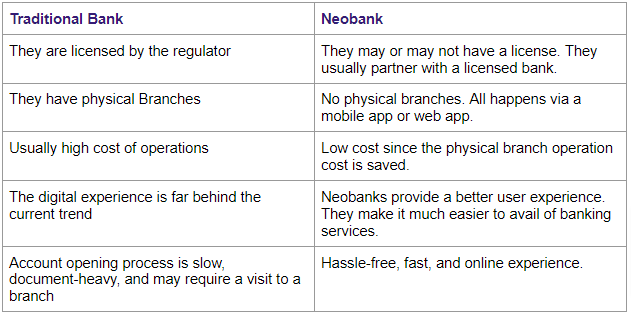
Traditional banks are the entities that hold the licenses to operate a full-fledged bank with credit products, cards, lending products, and have a physical presence.
In contrast to that, Neobanks offer banking services via an online interface and have no physical presence. In fact, a few Neobanks do not have a license like a traditional bank, hence, they partner with a traditional bank.
Few key distinctions between the two:
Gig Economy
A technology platform that connects a service provider with the service seeker. In this case, a service provider is a gig worker who can do that task. Examples: Delivery executives, cab drivers in ride-sharing apps, independent contractors for consumer services on platforms like Urban Company. Typically, this is not a conventional job where the employer takes care of most things like provident fund, health insurance, salary account provided, etc.
Opportunities
Requires minimum, low skill-set
Quick employment option
Education is not a deterrent
Risks
Job security
No employment contract hence labor laws may not always cover them.
Very limited banking services like loans.
Salary Accounts and regular accounts
Salary accounts, when compared to a regular savings account, have the following advantages:
Zero balance account. No Monthly minimum balance required.
No fees charged for not maintaining an average monthly balance.
Card issuance is not charged. A debit card is typically given for free.
No extra charges on the transfers or payments.
A credit card with income-based limits is given for 1 or 2 years for free.
Access to other financial products like Mutual Funds etc without much due diligence.
Interest on the account balance.
Why is this context important?
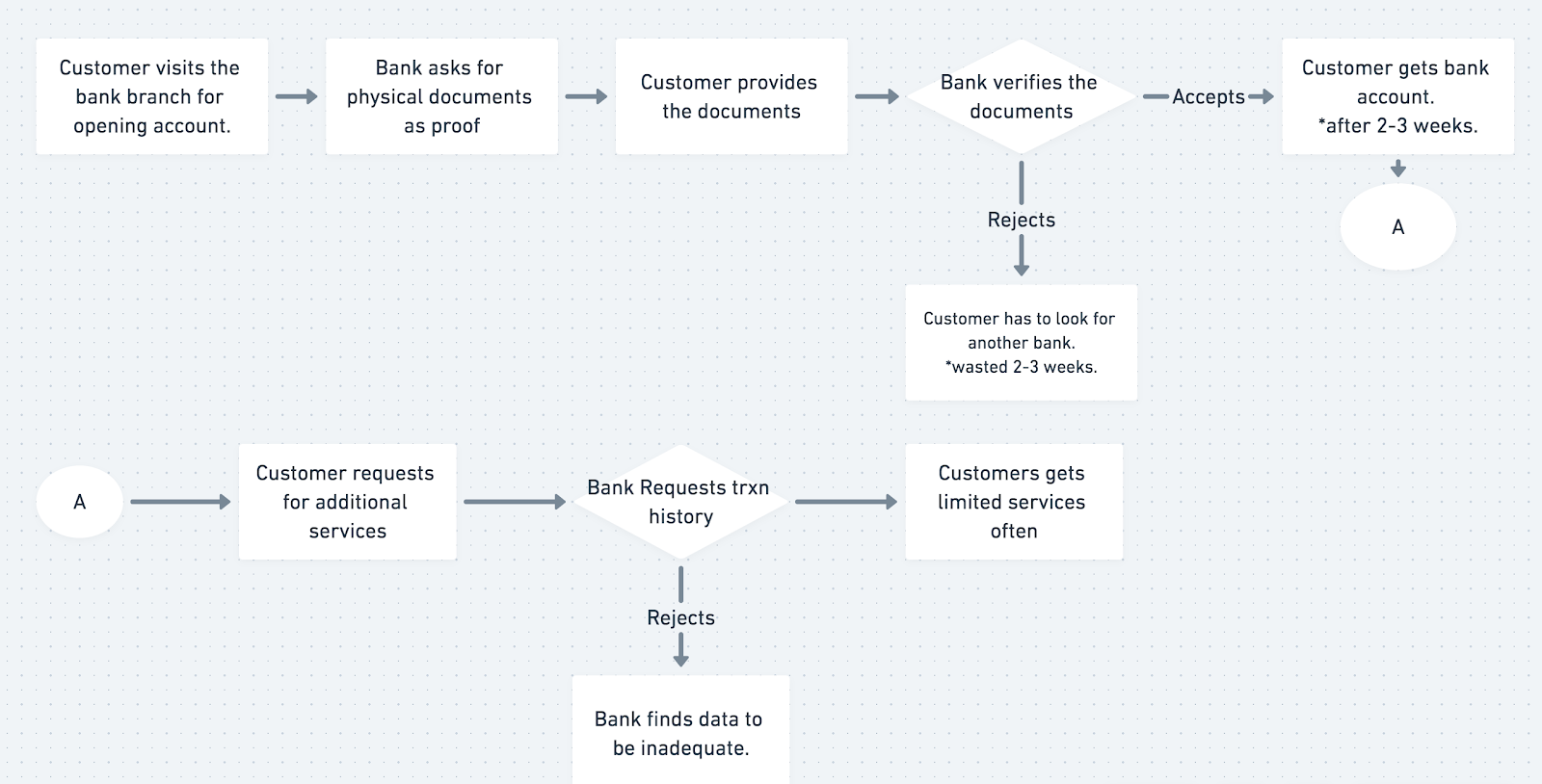
Opening a bank account with a traditional bank is slow, requires heavy documentation, and tends to deny banking services to a gig worker because of their nature of work which comes with a certain risk.
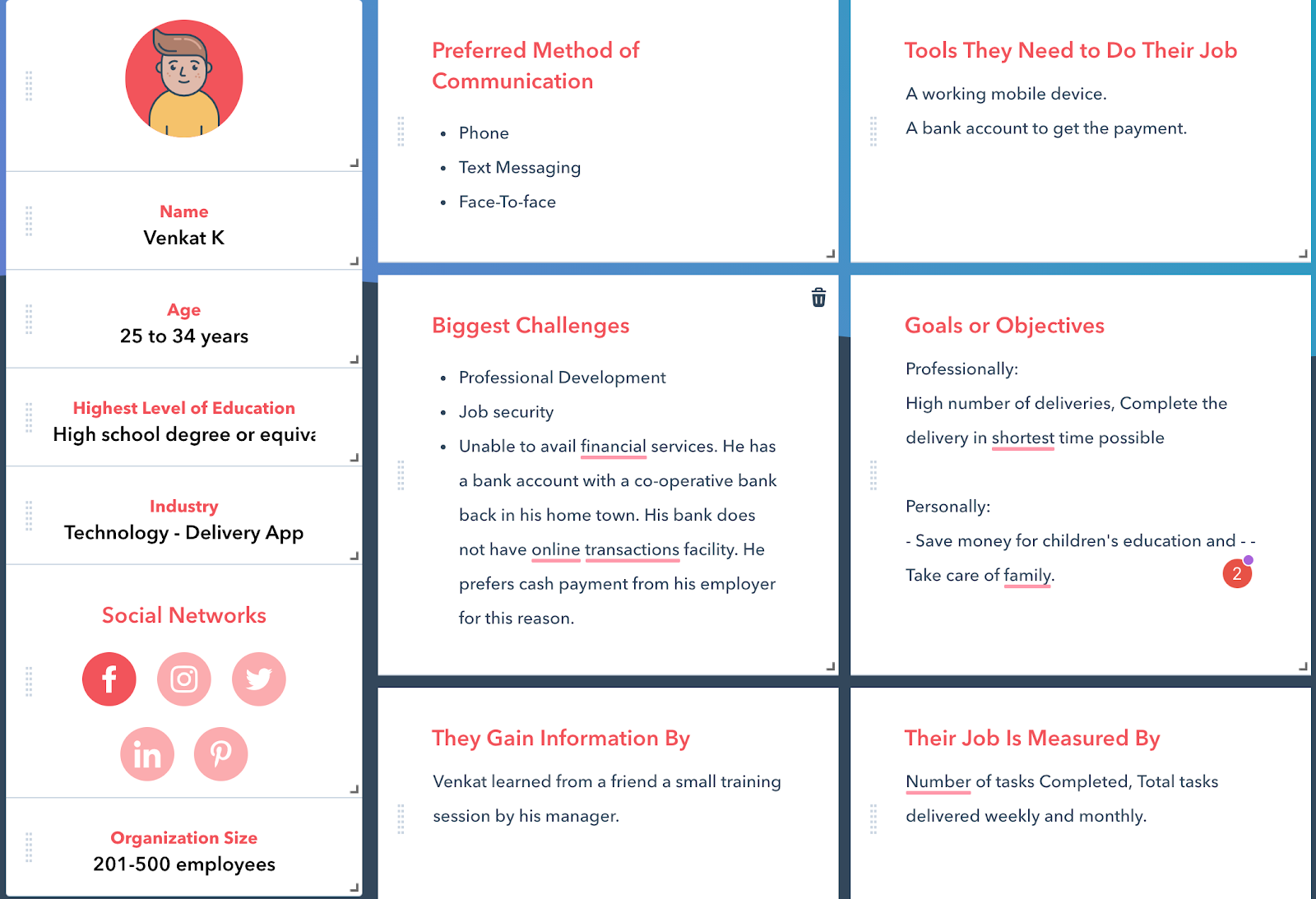
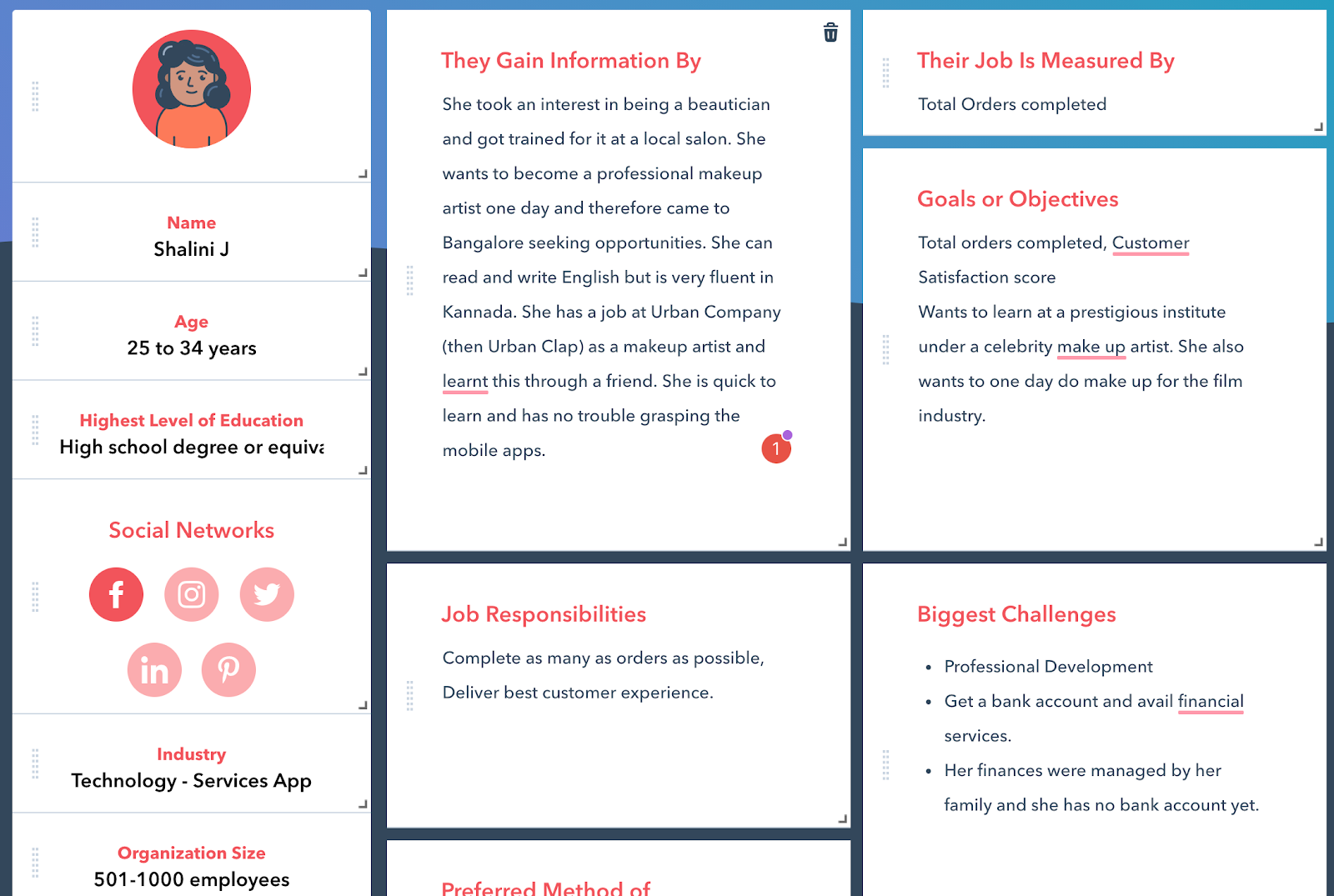
User Persona
Venkat K
Shalini J
Objective
To give access to the best banking and financial services to the gig workers by means of providing a bank account with salary account benefits and other banking services hassle-free via a mobile application.
Market Sizing
Globally, the gig economy is expected to grow to ~USD 455Bn by 2023. Ref.
Also, the neobank is on the rise since it is expected to grow to approx. USD 400Bn by 2026 globally.
But the Indian market with a labor force in the urban areas is estimated to be 35 Mn and growing.
To give perspective, UrbanCompany alone has grown from 3 Cr in FY16 to 142Cr in FY20 in revenue. Currently, they have 25,000 professionals or Gig workers on the platform. Ref.
These are the indicators of rising gig workers and an opportunity for the product.
Competitive Analysis
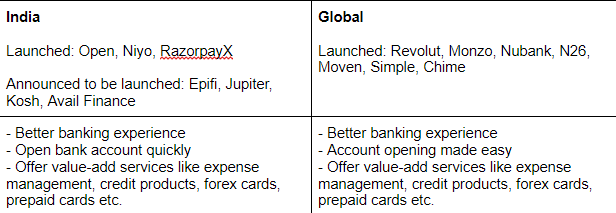
The landscape for both the Indian and the Global players is almost similar whereby they challenge the existing banking experience, provide a better user experience, and bundle the value-add services to the customers.
With all companies above funded heavily for their operations, it is apparent that neo-banking is definitely on the rise in India. This indicates an opportunity for the company to pursue this product.
Scope
– The gig economy is large and for the purpose of this case study, I am considering service providers like delivery executives and home services executives.
– This case study will include the account opening experience for any gig worker who wants to get a bank account instantly.
– For the purpose of this case study, I will cover the Indian market only.
– The wireframes are done by keeping Android in mind. iOS platform is part of the product roadmap section.
Assumptions
– BankNow operates under the license of a partner bank since there are no specific guidelines by RBI on neobanks. Ref. In case the company holds the license, it will not have any significant impact on the user journey.
– Users are connected to the internet, possess a mobile device with Android OS.
– The current products available in the market are inadequate compared to the rising demand in terms of experience and service.
Proposed Solution
A digital bank account for the gig economy worker for a salary account available on the mobile application.
Following are the key aspects that can be focussed on:
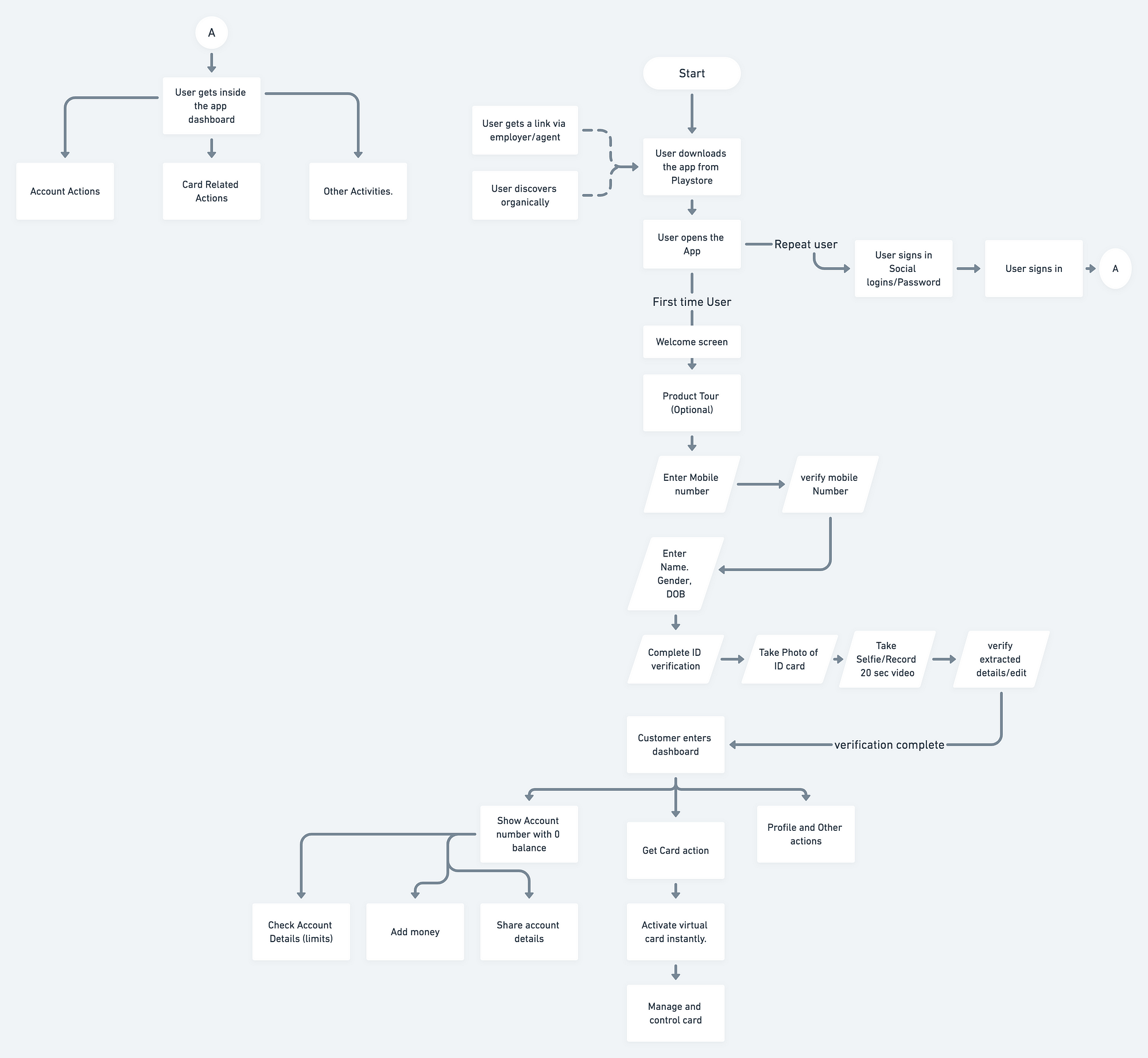
Onboard the user in the shortest time: Online KYC with minimum steps to get access to the account.
The instant virtual card on the account to get started on the usage.
Physical cards for the ATM withdrawals.
Attractive interest, No hidden fees.
No minimum balance commitment.
Account Management:
— Check the balance in the app
— Transfer money to friends and family from the app
— Manage and Control card from the app.
Finance Management
— Check your spends
— Categorize your spending and see if you are overspending.
— Receive important notifications over Whatsapp.
Traditional Bank account opening flow:
Proposed Solution for the BankNow Account opening:
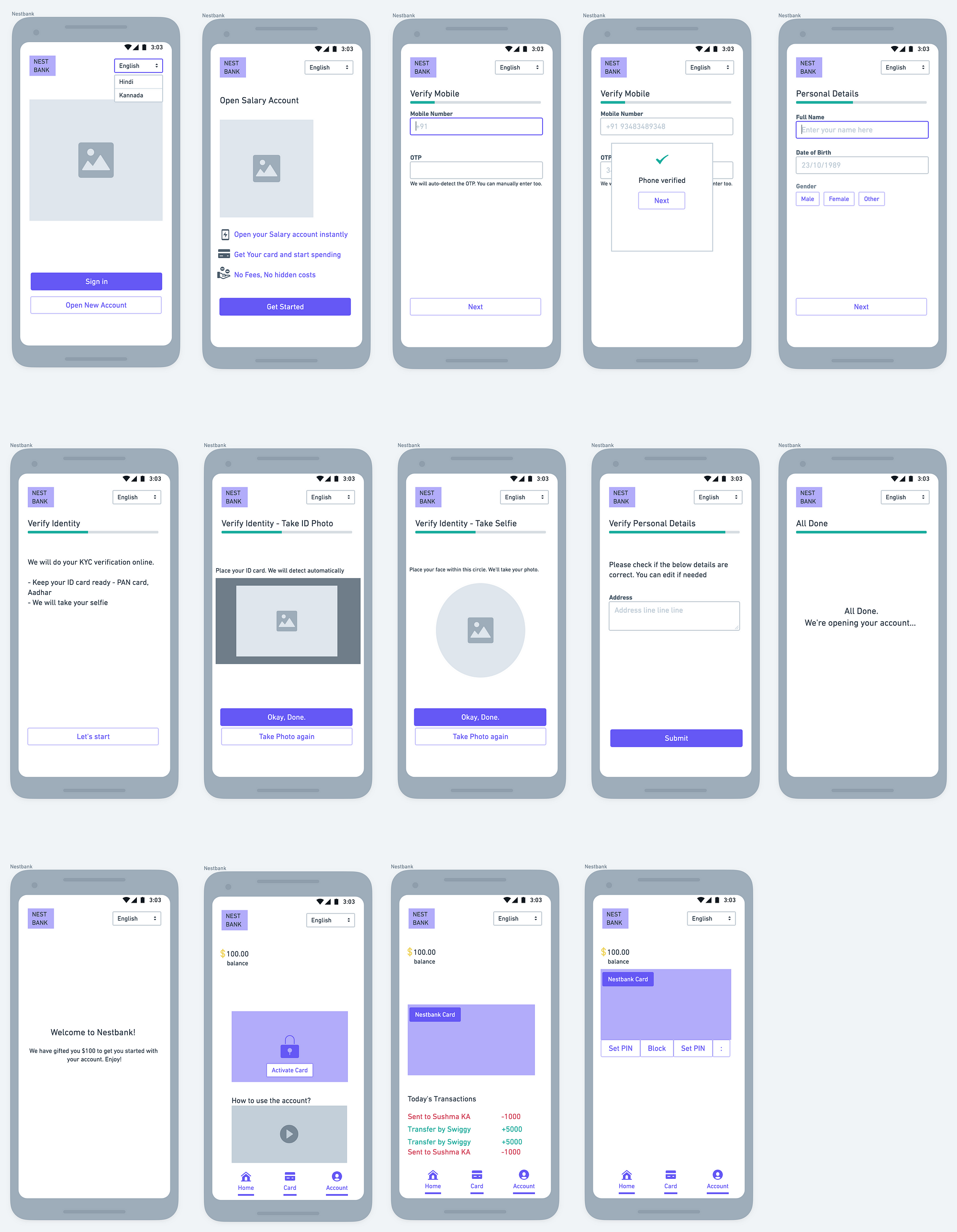
Wireframes for the user’s journey:
Product Marketing Note:
While the actual copy for this note will depend on the product marketing team, these are the possible ways to attract customers.
Customer Facing Copy:
Having trouble getting a bank account? Are you getting drowned in the documents? BankNow has you covered. All you need is an ID card and we do the rest for you.
Get your salary account within the blink of an eye. No more branch visits and no paper-work required!
BankNow Salary Account is hassle-free and cost effective! Download the app Now.
For the Team:
We give traditional benefits of a salary account in the modern banking app! With millions of people joining the gig economy each year, it is difficult to ignore the gig workers. But these workers are underbanked, unable to avail of financial and banking services. They are constantly on the move and they need a bank partner that moves with them.
With BankNow’s neobanking solution, we offer Salary accounts to gig workers. Open accounts faster, get cards for spends and analytics, all on the mobile application. BankNow product aims to include gig workers in banking and financial services.
Go to Market Strategy
Launch with the mobile application to a specific segment.
Closed Beta Launch — One partner with a limited number of customers. (Beta is required for eliminating the initial hiccups)
Controlled public launch — Launch in tier 1 Cities. Partner with aggregators or gig job providers. Reason for tier 1 city — the gig workers are more likely to be tech-savvy and hence, faster adoption. In the first launch, target the likes of UrbanCompany, Swiggy, Runnr, and Dunzo.
Public Launch — Target all cities in India.
Customer Acquisition
I have listed down the following possible channels for customer acquisition while acknowledging that the initial launch will potentially spread via word of mouth.
– Partner with local banks. They can offer a digital banking experience and attract more users. Opportunity for them to onboard new customers with a better experience.
– Partner with local/national unions for the specific task force — Drivers have their Unions.
However, out of the above, I would prefer a partnership with the service platforms themselves like Uber, Swiggy, Dunzo, UrbanCompany, etc.
Metrics and Tracking
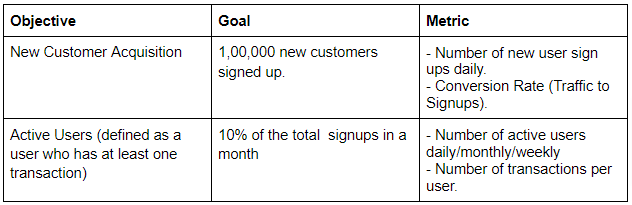
The goal of the Product: Acquire 1,00,000 customers in 1 year. (Includes beta launch)
The key Indicator will be Month on Month growth in new customers.
Product Roadmap
At Launch (Jan 2021)
Mobile App Open salary account instantly with eKYC Virtual Cards
Phase 1 — (Jan — Mar)
Physical card order flow in the app. Local language support
Phase 2 — (Mar — July)
Rewards on card spends Spend Analytics iOS platform
Phase 3 — (July — Dec)
The first version of the lending product.
Disclaimer: This case study is my personal work and in no way borrowed or copied. However, I did use the web and books for research and inspiration.
It’s weekend. You get up late, and decide to go out for brunch. You go to the wardrobe and it hits you, “I don’t have fresh clothes to wear.” Your pile of clothes has been sitting in the basket for a week and you procrastinated the task. This happened to me recently. I wondered, “why do we have to do laundry every week?” Why can’t the washing machine just take the dirty clothes and do it by itself.
And here we are. This is my experiment with writing down moonshot ideas. I particularly chose physical products because it pushes me to think different. I have been working on software products for many years and rarely I paid attention to the physical products around me. Over the years, I’ve been noticing that the gap between the physical and the digital products is minimising. We have app-controlled home devices like vacuum cleaners, light bulbs, electric vehicles etc. It will only get better from here.
Back to my laundry problem. While there may be a segment of population that enjoys doing the laundry, I completely hate it. I dread the day I have to do the laundry.
Sure, we have come a long way from walking miles to a source of water and washing our clothes with hands. Those days are in the past. Being in tech, I cannot help but think, “why is our laundry stuck in the ancient past?”
Let’s see a typical person’s journey doing laundry:
You take off your dirty clothes and throw them in the laundry basket → You choose a day to sort the clothes and dump them in the washing machine → Load the detergent → Choose the wash cycle and run it → If you have separate dryer then transfer the clothes to the dryer → You take the clothes out → Fold the clothes.
You repeat this either daily, weekly or even monthly.
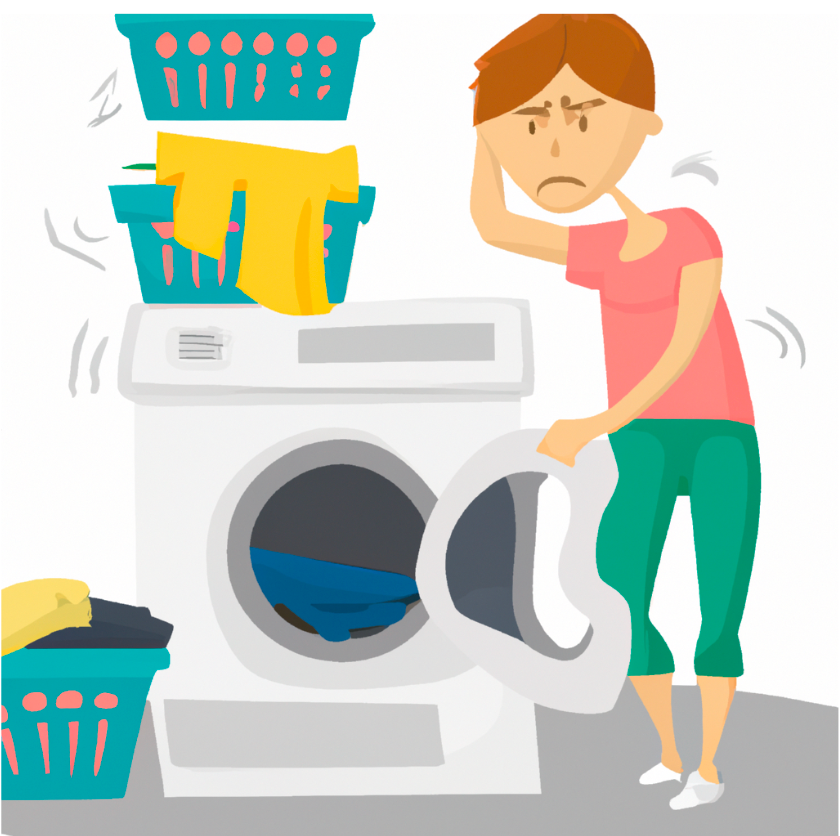
A frustrated person doing laundry. Image generated via Canva.
All we need is fresh clothes, washed and dried. This is literally our goal.
What if…We completely redesign our laundry experience.
After shower, throw the clothes in the machine. Your machine takes care of the rest. All you need to do is take the folded clothes and keep it in the wardrobe. (Of course, you can have a robot to do this for you, but one idea at a time).
I just want to dump my dirty clothes daily in one section. The machine should be able to sort the clothes in different piles based on fabric type and color.
After a pile is sufficiently full, the machine chooses to load them in the washer. The washer can have its own intelligence for choosing a specific cycle and loading the detergent as required from an attached bottle.
Once the washing is done, the dry cycle can start.
After the clothes are dried, it should move the clothes to next section to fold the clothes. This is optional, in my opinion. Because our goal is to have fresh laundry, folding is a bonus!
That’s it! That is my idea.
If you notice every step here has the potential to make it more efficient. The sorting stage can be made very sophisticated. The washing part itself can be optimised for efficiency and energy consumption. The possibilities are endless!
How to implement this and how does this work? I have no idea. However, I am not looking at feasibility of this product. It is just a crazy idea and I want to document it. I hope that one day someone will find a solution.
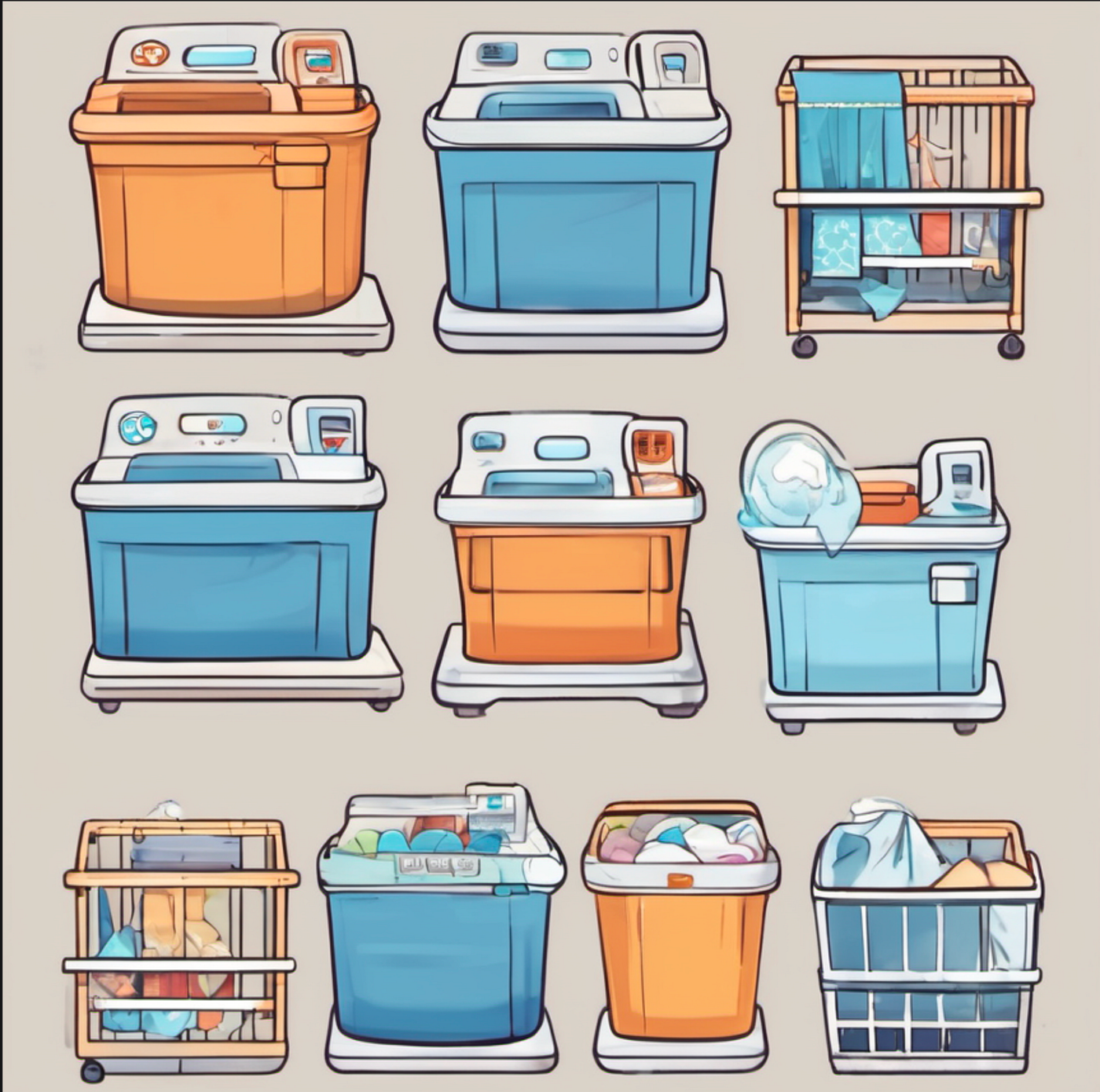
Anyway, just for fun, I used AI to generate this dreamy machine for me. Here is the image and I don’t know what to think of it:
AI generated image for all-in-one machine
What would have been your prompt for AI to give the most accurate image?



 Maria Martin